






What's Happening?
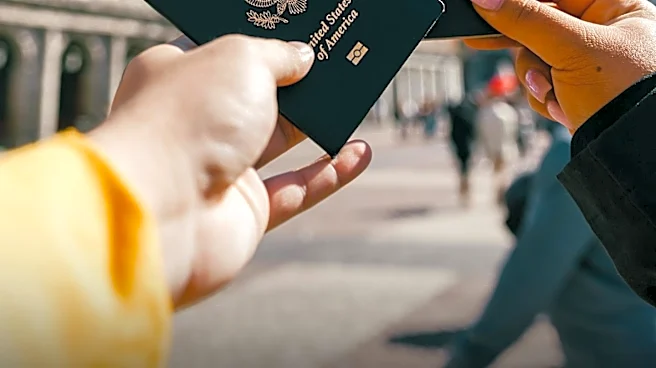
The U.S. passport, once the most powerful in the world, has seen a decline in its global ranking over the past two decades. According to the Henley Passport Index, the U.S. passport is now ranked 10th, a significant drop from its number one position in 2006.
This decline is attributed to changes in visa-free travel agreements with several countries. For instance, a reciprocal agreement with Brazil ended in 2025, requiring visas for travelers from both nations. Similarly, countries like Venezuela, Turkey, Myanmar, and Ghana have altered their visa requirements for U.S. citizens over the years. Despite these changes, American passport holders can still travel to approximately 179 countries without a visa, covering about 92% of the world's nations. However, other countries have expanded their citizens' travel freedoms, with Singapore now holding the top spot for passport power, allowing visa-free access to 192 destinations.
Why It's Important?
The decline in the U.S. passport's power reflects broader geopolitical shifts and the changing dynamics of international relations. A passport's strength is often seen as an indicator of a country's global influence and diplomatic relationships. The reduction in visa-free access for U.S. citizens could impact international travel, making it more cumbersome and costly due to the need for advance visa applications. This change may affect U.S. tourism and business travel, potentially influencing economic activities linked to international mobility. Additionally, the shift highlights the growing influence of other nations, such as Singapore and the UAE, in global travel and diplomacy. The U.S.'s position on the Global Peace Index, which correlates with passport strength, also underscores the complex interplay between peace, security, and international mobility.