



What's Happening?
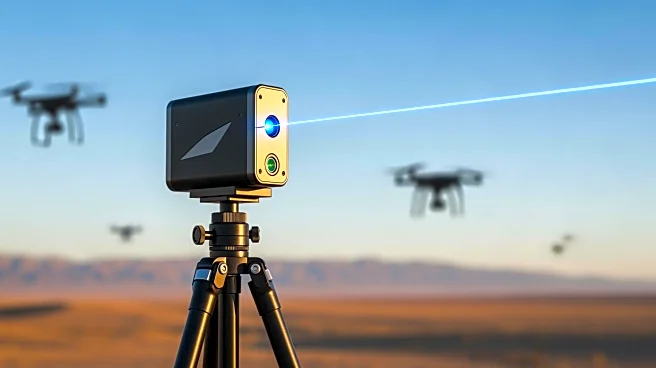
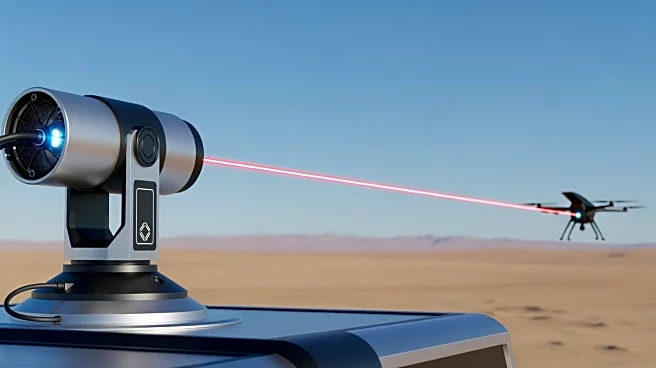
The U.S. Department of Defense (DoD) and the Federal Aviation Administration (FAA) have conducted a high-energy laser test aimed at advancing the safe use of counter-uncrewed aerial systems (C-UAS) within U.S. airspace. This test, conducted on March 7-8,
2026, is part of a long-term partnership between the DoD and FAA to integrate counter-drone technologies safely into national airspace. The test focused on examining FAA safety issues, collecting data on the laser's effects on aircraft surrogates, validating automated safety shut-off systems, and analyzing aircrew eye safety. The initiative is supported by a group of stakeholders, including the White House Task Force to Restore American Airspace Sovereignty, and involves key partners such as the White Sands Missile Range and Northern Command. The test is a continuation of efforts by the DoD to refine system capabilities and ensure the safety and effectiveness of these technologies.
Why It's Important?
This development is significant as it addresses the growing threat posed by small uncrewed aerial systems, which can be used for surveillance or even as weapons. By advancing counter-drone technologies, the U.S. aims to protect its airspace and critical infrastructure from potential drone threats. The collaboration between the DoD and FAA ensures that these technologies are not only effective but also safe for integration into civilian airspace. This initiative could lead to enhanced national security and the protection of sensitive areas, such as the National Capital Region. The involvement of multiple government agencies highlights the importance of a coordinated approach to addressing emerging threats in the airspace.
What's Next?
Following the successful test, further evaluations and refinements of the counter-drone systems are expected. The data collected will inform future developments and potential deployment of these technologies across the U.S. The DoD and FAA will likely continue their partnership to ensure these systems are ready for operational use. Additionally, there may be increased collaboration with other agencies and stakeholders to expand the scope of these technologies and address any regulatory or safety concerns. The ongoing efforts will focus on ensuring that the U.S. remains at the forefront of counter-drone technology and airspace security.