








What's Happening?
Terrorist groups, including Jama’at Nusrat al-Islam wal-Muslimin (JNIM) and Islamic State Sahel Province (ISSP), are increasingly targeting gold mines and surrounding communities in Burkina Faso, Mali, and Niger. These groups use the mines as a source
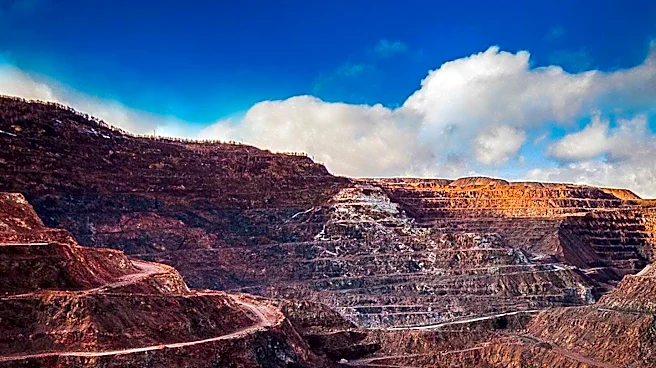
of revenue, recruits, and weaponry, such as explosives. Burkina Faso is particularly affected, accounting for 75% of all mining-related violence in the Alliance of Sahelian States (AES) countries. Instead of directly attacking the mines, JNIM and ISSP establish control over nearby towns and roads, then tax or extort miners and traders, often in gold, which can be easily stored and laundered. The Inata mine in northern Burkina Faso, first targeted in 2018, was closed by the ruling junta in 2024 and is now reportedly under JNIM control. The Liptako-Gourma region, where the three AES countries meet, is a contested zone between JNIM and ISSP and hosts significant gold mines like Essakane and Samira.
Why It's Important?
The exploitation of gold mines by terrorist organizations in the Sahel has significant implications for regional stability and international security. The revenue generated from these activities provides critical funding for JNIM and ISSP, enabling them to sustain their operations, acquire weapons, and expand their influence. This financial lifeline allows these groups to continue their campaigns of violence and destabilization, posing a direct threat to the governments and populations of Burkina Faso, Mali, and Niger. The control over mining areas also signifies control over people, routes, and money, indicating a deeper entrenchment of terrorist networks within the local economies and social structures. The potential for this pattern of mining-related violence to spread to neighboring countries like Senegal, Guinea, Côte d’Ivoire, Ghana, and Nigeria further highlights the regional and potentially international security risks.
What's Next?
The expansion of mining-related violence is likely to continue beyond the current Alliance of Sahelian States (AES) countries, with JNIM and ISSP seeking to extend their regional footprint. Experts warn that patterns observed in the central Sahel could spread further south to coastal West Africa, and mining communities in northwest and north-central Nigeria are also potential targets. Governments in the region will need to develop more effective strategies to counter the indirect control tactics employed by these terrorist groups, which focus on taxing and extorting rather than direct mine assaults. This may involve enhanced security measures around mining areas and critical transportation routes, as well as efforts to disrupt the financial networks that allow these groups to launder gold and acquire resources. International cooperation and intelligence sharing will be crucial to address the transnational nature of these threats.
Beyond the Headlines
The situation in the Sahel reveals a complex interplay between economic vulnerability, governance challenges, and the rise of extremist ideologies. The reliance of terrorist groups on gold mining underscores how illicit economies can fuel conflict and undermine state authority. This indirect control over resources, through taxation and extortion, allows these groups to embed themselves within local communities, making it harder to dislodge them through purely military means. The ethical implications extend to the global gold market, as it becomes increasingly difficult to ensure that gold sourced from the region is not inadvertently funding terrorism. Addressing this issue requires a multi-faceted approach that includes not only security operations but also economic development, improved governance, and community engagement to reduce the appeal and influence of these groups.