
What's Happening?
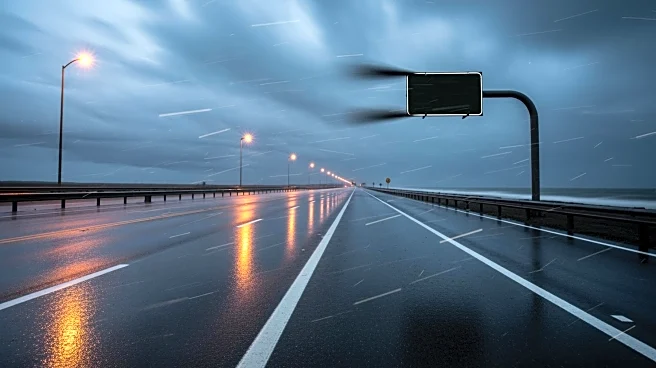
Storm Goretti is causing significant travel disruptions across the UK and France, with heavy snow and strong winds leading to flight cancellations and train delays. The Met Office has issued a rare red
wind warning for south-west England, while amber alerts for snow are in place in Wales, the Midlands, and parts of northern England. Airports in the Channel Islands, including Jersey and Guernsey, have closed, and most flights have been canceled or rescheduled. London Gatwick and London Heathrow airports are experiencing delays and cancellations for flights to and from Ireland, the Channel Islands, and some European destinations. Rail services across the UK are also heavily impacted, with cancellations and delays due to adverse weather conditions. In France, the national rail operator SNCF has suspended several services, particularly in Normandy, Brittany, and Centre-Val de Loire, due to expected strong winds.
Why It's Important?
The disruptions caused by Storm Goretti highlight the vulnerability of transportation infrastructure to severe weather events. The cancellations and delays affect thousands of passengers, leading to economic implications for airlines, rail operators, and related industries. The situation underscores the need for robust contingency planning and infrastructure resilience to mitigate the impact of such weather events. The travel chaos also affects businesses relying on timely transportation of goods and services, potentially leading to supply chain disruptions. Additionally, the storm's impact on travel plans could have broader economic repercussions, affecting tourism and local economies dependent on travel and hospitality.
What's Next?
As Storm Goretti continues to affect the region, transportation operators are likely to face ongoing challenges in managing schedules and ensuring passenger safety. Airlines and rail operators will need to communicate effectively with passengers regarding rebooking options and service updates. The situation may prompt a review of emergency response protocols and infrastructure investments to better withstand future weather-related disruptions. Authorities in affected areas may also need to coordinate with emergency services to ensure public safety and minimize the storm's impact on communities.