
What's Happening?
Israel has announced plans to reopen the Rafah border crossing with Egypt, a critical gateway for Gaza, following the recovery of the remains of the last Israeli hostage, Ran Gvili. The reopening is part
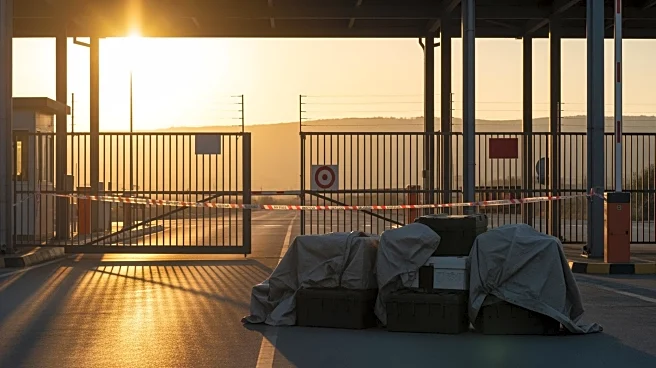
of the second phase of a U.S.-brokered ceasefire agreement between Israel and Hamas. The Rafah crossing, which was controlled by Egypt before the war, is vital for the movement of goods and people into and out of Gaza. The crossing's reopening is expected to facilitate humanitarian aid and pedestrian passage, subject to Israeli inspection. The Egyptian Red Crescent has already facilitated the entry of a convoy carrying over 7,060 tons of food and medical aid through the Egyptian side of the crossing, en route to Israeli inspection at Kerem Shalom before potentially heading into Gaza.
Why It's Important?
The reopening of the Rafah crossing is crucial for Gaza's population of over 2 million people, who are in dire need of humanitarian aid, including fuel, food, medicine, and shelter. The crossing is the only gateway to the outside world not controlled by Israel, making it essential for international travel and economic activities. The reopening could significantly impact Gaza's devastated economy by allowing the export of Palestinian-made products to Egypt and the Arab world. Additionally, it provides a lifeline for Gazans seeking medical treatment abroad. The move is also part of broader efforts to implement the Gaza peace plan, which includes the establishment of a new Palestinian government and the territory's reconstruction and demilitarization.
What's Next?
The exact timing of the Rafah crossing's reopening remains unclear, and it is uncertain whether it will allow the flow of goods and people in both directions. Israel has agreed to reopen the crossing for pedestrian passage only, subject to full Israeli inspection. Hamas has called for the crossing to be opened without restrictions. The crossing's reopening is expected to play a central role in Gaza's reconstruction, with plans to build workforce housing in Rafah. However, Israeli Prime Minister Benjamin Netanyahu has emphasized that the next phase of the ceasefire involves disarming Hamas and demilitarizing Gaza, rather than reconstruction.
Beyond the Headlines
The reopening of the Rafah crossing raises questions about the future governance of Gaza, as the current ceasefire deal calls for Hamas to have no role in running the territory. The crossing's operation will be crucial for Gaza's reconstruction efforts, and its management could influence the political dynamics in the region. The humanitarian terms of the previous ceasefire, which include allowing a certain number of truckloads of aid per day into Gaza, will continue to be adhered to. The crossing's reopening also highlights the ongoing humanitarian crisis in Gaza and the need for international support to address the territory's challenges.