




What's Happening?
Starlab Space LLC has signed a joint Letter of Intent (LoI) with the European Space Agency (ESA) to establish preliminary terms for potential European utilization of the Starlab Space Station. This agreement builds upon previous discussions and a 2023
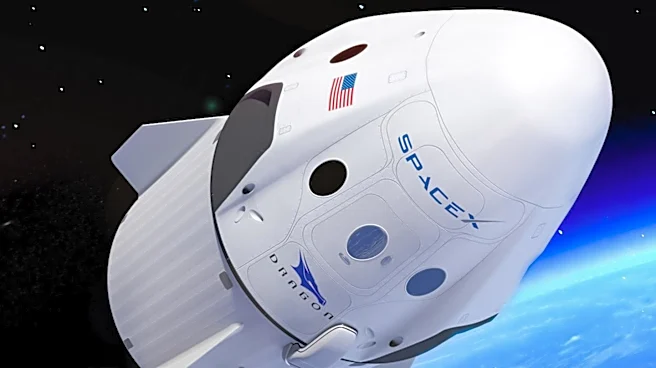
Memorandum of Understanding, aiming to define a framework for future collaboration as ESA transitions from the International Space Station (ISS) to commercial low Earth orbit platforms. The LoI outlines potential future ESA astronaut missions, payload use, and European operations aboard the Starlab Space Station. Specific provisions include the possible reservation of payload volume and facilities, such as glovebox facilities, cold stowage, ambient stowage, incubation facilities, and plant habitat utilization. The collaboration also considers the use of European cargo and future crew transportation capabilities. Marshall Smith, CEO of Starlab Space, emphasized that this LoI creates a clear pathway for European access to low Earth orbit, encompassing crew transportation, astronaut missions, research payloads, and in-space services.
Why It's Important?
This collaboration is significant for the future of space exploration and commercialization, particularly as the International Space Station approaches its retirement. For the U.S.-led Starlab Space, securing a partnership with ESA validates its commercial model and expands its international user base, ensuring a broader market for its next-generation orbital platform. This move helps to solidify the U.S.'s leadership in the burgeoning commercial space economy. For ESA, it represents a crucial step in maintaining European access to low Earth orbit for scientific research and astronaut missions, strengthening its autonomy in space activities. The agreement aims to lower the cost, complexity, and risk of conducting research and technology development in low Earth orbit, benefiting both governmental and commercial customers. The involvement of various U.S. and international partners in Starlab, including Voyager Technologies, Airbus, and Mitsubishi Corporation, underscores the global nature of this endeavor and its potential to foster international cooperation in space.
What's Next?
Following the signing of this Letter of Intent, Starlab Space and ESA will continue their collaboration to advance potential pathways for science, technology development, astronaut missions, and other use opportunities aboard the Starlab Space Station. Any subsequent steps will be guided by decisions made by ESA Member States. The framework established by the LoI will lead to more defined agreements regarding the technical, operational, and commercial aspects of European utilization. Starlab Space will focus on developing its AI-enabled commercial space station to ensure a seamless transition of microgravity science and research from the ISS. This ongoing partnership is expected to facilitate the integration of European capabilities, such as cargo and crew transportation, into the Starlab ecosystem. The success of this collaboration could set a precedent for future international partnerships in the commercial space sector, influencing how nations access and utilize orbital platforms in the post-ISS era.
Beyond the Headlines
The partnership between Starlab Space and ESA signifies a broader shift in the landscape of space exploration, moving towards a more commercialized and internationally collaborative model. This transition raises important questions about the long-term sustainability and accessibility of low Earth orbit. By involving private companies and international agencies, the initiative aims to democratize access to space, potentially fostering innovation and reducing the financial burden on individual nations. However, it also introduces complexities related to intellectual property, regulatory frameworks, and the equitable distribution of benefits from space research. The development of AI-enabled commercial space stations like Starlab could revolutionize scientific discovery and technological advancement in microgravity, opening new avenues for research in fields such as medicine, materials science, and advanced manufacturing. This commercialization also highlights the increasing importance of public-private partnerships in achieving ambitious space goals and ensuring continued human presence in orbit.