



What's Happening?
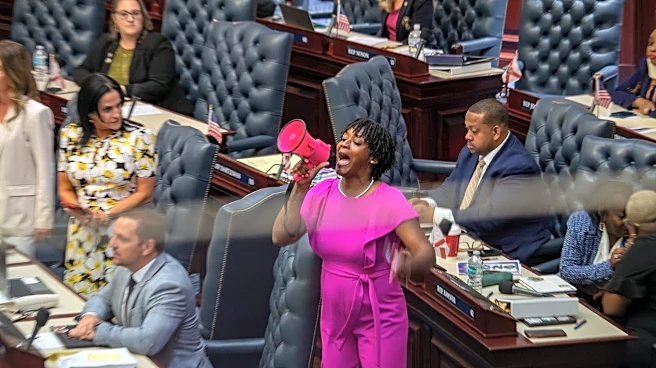
Representative Maxwell Frost, a Gen Z Democrat from Florida, participated in a debate on Jubilee’s Surrounded, where he defended the Democratic agenda against a group of 20 Baby Boomers. The discussion covered various topics including affordability, taxation,
socialism, and government spending. Frost advocated for increased government involvement as a solution to economic challenges, such as high grocery bills, housing costs, car prices, and medical expenses. However, the Baby Boomer participants challenged his proposals, questioning the associated costs and potential consequences of further government expansion. A key point of contention was the Democratic Party's approach to taxation, which Frost presented as a method for funding public services and shared benefits, while his opponents viewed it as a policy leading to higher taxes and increased government control. The debate highlighted a generational divide in perspectives on economic solutions and the role of government.
Why It's Important?
This debate is important as it illustrates a significant generational and ideological divide within the U.S. regarding economic policy and the role of government. Representative Frost's experience reflects the challenges progressive politicians face in selling their agenda to a segment of the electorate that has witnessed decades of government initiatives and their outcomes. The Baby Boomers' skepticism, rooted in past experiences with government spending and taxation, highlights a persistent concern about the effectiveness and cost of federal programs. This dynamic impacts public policy discussions, particularly concerning issues like inflation, healthcare costs, and housing affordability. The differing views on whether government intervention is a solution or a contributing factor to economic problems can influence voter behavior and the direction of future legislative efforts, affecting various industries and economic stakeholders through potential changes in tax policy, regulation, and social programs.
What's Next?
The ongoing dialogue between different generations and ideological groups regarding economic policies is likely to continue shaping political discourse. As issues of affordability and government spending remain central to the American public, politicians like Representative Frost will likely continue to refine their messaging to address the concerns of a diverse electorate. Future policy debates may see a continued push for government-led solutions from progressive factions, while more fiscally conservative groups will likely advocate for reduced government intervention and lower taxes. The outcome of these discussions could influence upcoming elections and legislative priorities, potentially leading to shifts in economic strategies, regulatory frameworks, and social welfare programs. The ability of political leaders to bridge these generational and ideological gaps will be crucial in addressing the nation's economic challenges effectively.
Beyond the Headlines
Beyond the immediate policy debates, this exchange touches upon deeper societal and cultural implications. The "American Dream" itself is being re-evaluated, with Democrats increasingly framing advancement as difficult, justifying wealth redistribution, while others argue that government barriers hinder prosperity. This generational clash also highlights the evolving perception of government's trustworthiness and efficacy. The Baby Boomers' accumulated skepticism suggests a weariness with promises of revolutionary change that often lead to costly disappointments. This sentiment can erode public trust in institutions and political processes, making it harder to achieve consensus on national issues. The debate also underscores the importance of lived experience in shaping political views, with older generations drawing on decades of observation to critique proposed solutions. This can lead to a more nuanced understanding of policy impacts, but also to entrenched positions that are difficult to reconcile, potentially exacerbating political polarization.