









What's Happening?
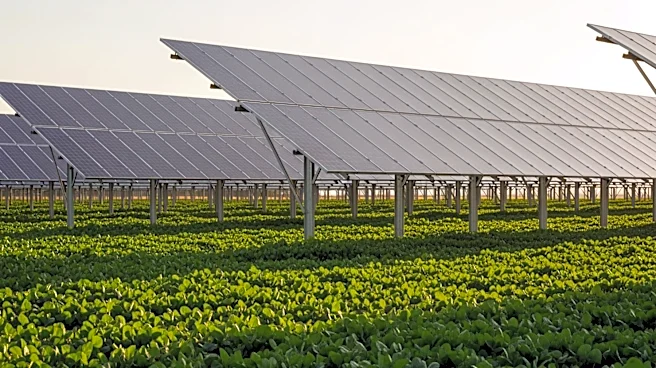
Agrivoltaics, a system that combines solar energy production with agricultural activities, is gaining traction as a sustainable solution to address the growing demands of food production and energy efficiency. This innovative approach allows for dual
land use, where solar panels are installed above crops, providing shade and reducing heat stress on plants while generating renewable energy. The system not only enhances agricultural yields by protecting plants from extreme weather but also improves the efficiency of solar panels by keeping them cool. The U.S. Department of Energy projects that solar energy could increase from 4% to 40% of the U.S. electrical supply by 2035, with agrivoltaics playing a significant role. States like Colorado and New York are actively promoting research and implementation of agrivoltaic systems, highlighting its potential as the future of sustainable agriculture.
Why It's Important?
The integration of agrivoltaics addresses critical environmental and economic challenges by reducing greenhouse gas emissions and conserving water resources. As agriculture is responsible for a significant portion of global emissions, this dual-use system offers a viable path to mitigate climate change impacts. By enhancing land productivity and energy efficiency, agrivoltaics supports economic resilience for farming communities and reduces dependency on fossil fuels. The system's ability to increase farm productivity by up to 73% underscores its potential to revolutionize agricultural practices. However, challenges such as high initial costs and the need for adaptation among farmworkers remain. Despite these hurdles, the widespread adoption of agrivoltaics could lead to significant advancements in sustainable agriculture and energy sectors.
What's Next?
As agrivoltaics continues to gain popularity, further research and policy support are expected to drive its adoption across the United States. Efforts to reduce costs and improve system integration will be crucial in overcoming existing barriers. Stakeholders, including government agencies, environmental advocates, and the agricultural industry, are likely to collaborate on initiatives that promote awareness and implementation of agrivoltaic systems. The potential for agrivoltaics to transform land use and energy production presents an opportunity for the U.S. to lead in sustainable agricultural practices and renewable energy innovation.