


What's Happening?
China is actively mediating a ceasefire between Pakistan and Afghanistan, as the two countries have been engaged in intense fighting since February. The Chinese Foreign Ministry has confirmed that Foreign Minister Wang Yi has been in communication with
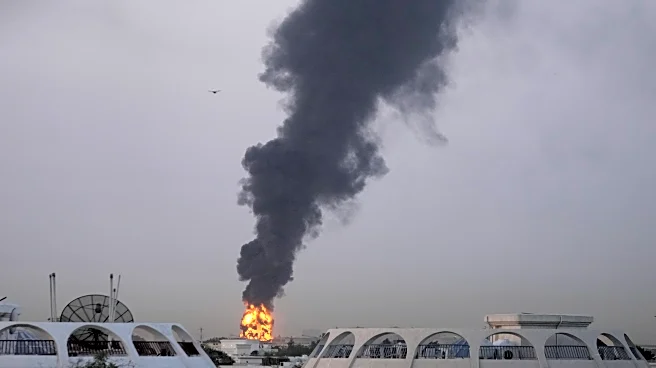
his Afghan and Pakistani counterparts, and a special envoy on Afghan affairs has been shuttling between the two nations. China aims to facilitate reconciliation and ease tensions, urging both sides to remain calm, exercise restraint, and engage in dialogue to achieve a ceasefire. The conflict escalated after Pakistan declared an 'open war' and conducted strikes on military and other facilities in Afghanistan, including the capital, Kabul.
Why It's Important?
The mediation by China is significant as it highlights the country's strategic interest in regional stability and integration. The ongoing conflict between Pakistan and Afghanistan poses a security threat that could disrupt China's broader vision for regional cooperation. The involvement of China as a mediator underscores its influence in South Asian geopolitics and its role in attempting to resolve disputes that could have wider implications for regional peace and security. The conflict also affects Pakistan's relations with Afghanistan, which have been strained due to Kabul's engagement with India, Pakistan's longtime rival.
What's Next?
China's continued efforts to mediate a ceasefire could lead to a reduction in hostilities between Pakistan and Afghanistan. If successful, this could pave the way for more stable relations and potentially open avenues for further diplomatic engagement. However, the situation remains volatile, and the success of China's mediation will depend on the willingness of both parties to engage in dialogue and compromise. The international community may also play a role in supporting these efforts to ensure long-term peace and stability in the region.
Beyond the Headlines
The conflict between Pakistan and Afghanistan has deeper implications for regional dynamics, particularly concerning the influence of India and the role of militant groups like the Tehreek-e-Taliban Pakistan (TTP). China's involvement as a mediator reflects its strategic interests in maintaining stability in a region that is crucial for its Belt and Road Initiative. The situation also highlights the complex interplay of regional alliances and rivalries, which could affect future geopolitical alignments and economic partnerships.