





What's Happening?
Russia has issued a stern warning to the United Kingdom, accusing it of deliberately escalating the Ukraine crisis by supplying drones used in attacks on Russian territory. The Russian Embassy to the UK stated that these actions confirm London's intent
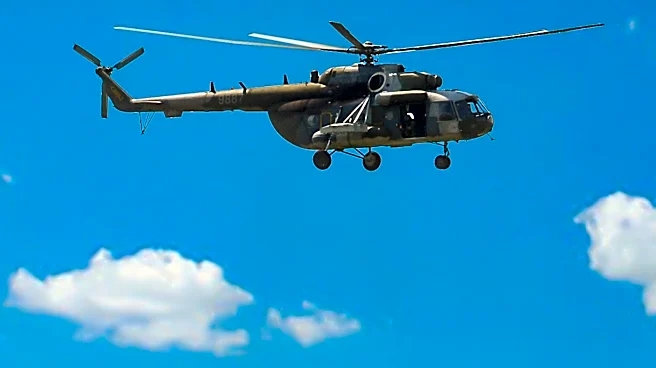
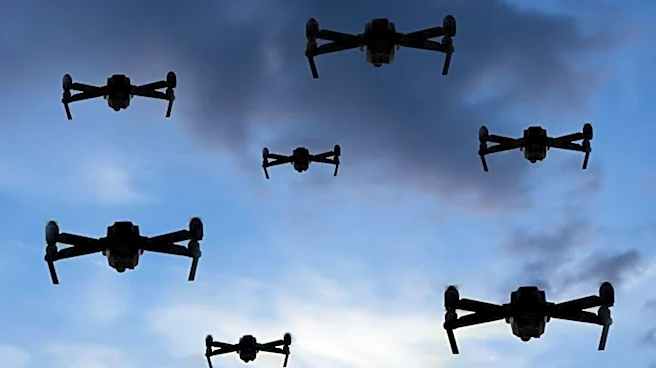
to contain Russia and inflict maximum damage by proxy, and warned of inevitable consequences. This accusation follows reports from Ukrainian army sources, published in The Times, indicating that British-built drones have been deployed over the past six months to target Russian oil refineries in Volgograd and near Moscow, as well as logistics hubs. The UK Ministry of Defence has affirmed its unwavering support for Ukraine, committing to provide necessary equipment to defend against Russian aggression. The UK has provided substantial financial aid to Ukraine for military equipment procurement, including a significant drone package comprising thousands of long-range strike, intelligence, reconnaissance, logistics, and maritime drones. These drones are reportedly battle-proven on the Ukrainian frontline, with a majority of the investment directed towards UK-based companies like Tekever, Windracers, and Malloy Aeronautics. However, British-manufactured microcomputers for flight control have also been discovered in Russian drones, prompting Ukrainian President Volodymyr Zelensky to call for stricter sanctions against British companies implicated in supplying components for Russian drones.
Why It's Important?
This development marks a significant escalation in the rhetoric surrounding the Ukraine conflict, directly implicating a major NATO member in attacks on Russian soil. Russia's explicit warning of 'consequences' raises concerns about potential retaliatory measures, which could further broaden the scope of the conflict and increase geopolitical instability. The UK's continued provision of advanced weaponry, particularly long-range drones, demonstrates a sustained commitment to Ukraine's defense, but also risks drawing the UK into a more direct confrontation with Russia. The use of British-built drones in strikes deep within Russia highlights the evolving nature of modern warfare, where advanced technology plays a crucial role in projecting power and inflicting economic damage. Furthermore, the discovery of British components in Russian drones underscores the complexities of global supply chains and the challenges of enforcing sanctions effectively, potentially leading to calls for more stringent export controls and greater scrutiny of defense industry suppliers. The targeting of Russian industrial and logistics facilities, including those of major retailers like Wildberries, aims to disrupt Russia's war economy and bring the conflict's impact closer to the Russian populace, a strategy that could intensify the conflict's economic dimensions.
What's Next?
In the immediate future, the UK is expected to maintain its stance of supporting Ukraine, with government ministers reiterating their resolve despite Russian threats. This suggests a continued flow of military aid, including drones and other advanced weaponry, to Ukraine. Russia, in turn, may consider various forms of retaliation, which could range from diplomatic actions and cyberattacks to more direct military responses, potentially targeting UK interests or assets. The ongoing drone attacks on Russian territory are likely to persist, as Ukraine aims to pressure the Russian leadership and disrupt its war efforts. This will likely lead to increased efforts by Russia to bolster its air defenses and counter-drone capabilities. The international community will be closely watching for any further escalation, particularly concerning the involvement of NATO members. Discussions around stricter sanctions and export controls on dual-use technologies will likely intensify, as will efforts to trace and prevent the diversion of components to unintended end-users. The long-term implications could include a re-evaluation of defense strategies and alliances, as well as a heightened focus on supply chain security in the defense sector.
Beyond the Headlines
The accusations and warnings exchanged between Russia and the UK delve into the complex legal and ethical dimensions of proxy warfare and international aid in armed conflicts. While the UK asserts its right to support a sovereign nation under attack, Russia views the provision of offensive weaponry as direct involvement, blurring the lines of neutrality and potentially challenging established international norms regarding state-sponsored military assistance. The use of drones, particularly those capable of long-range strikes, raises questions about accountability for civilian casualties and damage to infrastructure, even if the targets are military or economic in nature. The discovery of British components in Russian drones highlights a systemic issue within global manufacturing and trade: the difficulty of preventing sensitive technologies from reaching adversaries, even with sanctions in place. This could lead to a broader re-evaluation of how defense-related technologies are regulated and monitored internationally. Moreover, the strategy of targeting civilian-linked economic infrastructure, such as logistics hubs of major retailers, while intended to exert pressure, also raises ethical concerns about the impact on civilian populations and the potential for unintended consequences, further complicating the moral landscape of the conflict.