










What's Happening?
Entergy Mississippi has been awarded a $4.2 million grant from the U.S. Department of Energy (DOE) through its SPARK Initiative. This funding is designated for enhancing the performance of the utility's transmission system, specifically to increase electricity
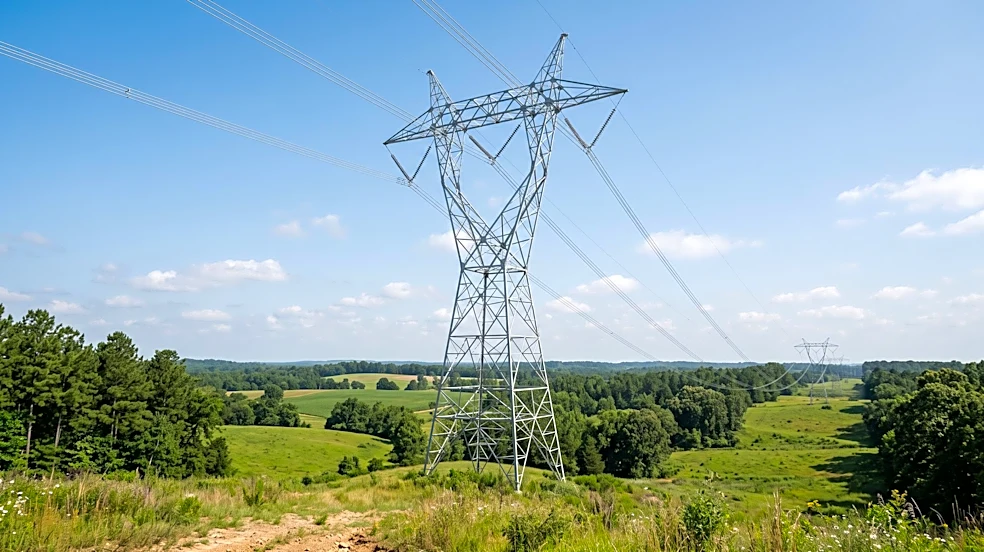
capacity along existing power lines in Mississippi. According to Haley Fisackerly, president and CEO of Entergy Mississippi, this investment will enable the grid to transmit at least 25% more electricity through current infrastructure without the need for new construction. The project aims to integrate new technology with existing transmission control systems, with short-term goals focused on feeding real-time data to these systems. Katie Jereza, assistant secretary of the DOE’s Office of Electricity, stated that this investment is part of a broader $14 million allocation for grid improvement projects, emphasizing the goal to increase electricity flow, strengthen reliability, and deliver power more efficiently to areas with growing demand. Entergy Mississippi plans to begin ordering necessary equipment soon, with construction expected to commence within the next two years.
Why It's Important?
This grant is significant for Entergy Mississippi and its customers as it aims to improve grid reliability and efficiency without directly increasing customer costs. Haley Fisackerly noted that the funding helps the utility avoid future investments in transmission upgrades that would otherwise be passed on to ratepayers, thereby contributing to long-term affordability. By increasing the capacity of existing power lines, the project can better accommodate fluctuating demands, such as those influenced by weather conditions, and support economic growth by providing more stable and efficient power delivery to new and expanding industries. The initiative also reflects a national push by the Department of Energy to modernize the electric grid, ensuring that Americans have access to dependable electricity at affordable costs. This investment in advanced technology for grid management is crucial for maintaining a robust energy infrastructure capable of meeting future demands and integrating diverse energy sources.
What's Next?
Entergy Mississippi will proceed with ordering the necessary equipment for the grid upgrades, with construction anticipated to begin within the next two years. The utility's resource planning engineer, Jeremy Loving, indicated that the immediate focus is on integrating new technology with existing transmission control systems to enable real-time data feedback. This integration is expected to provide insights into the capabilities of the new deployments and inform long-term strategies for grid enhancement. The project is part of a four-year plan that also involves Entergy's electric companies in Louisiana and Arkansas, aiming to implement dynamic line rating technology and other upgrades across 1,125 miles of transmission lines. This broader effort seeks to establish a scalable model for deploying advanced transmission technologies, allowing for future redeployment of dynamic line rating sensors to new corridors as needs evolve, thereby extending the value of the investment and accelerating modernization efforts.
Beyond the Headlines
The investment in grid modernization by Entergy Mississippi, supported by the Department of Energy, highlights a broader national strategy to enhance energy resilience and efficiency across the United States. This move towards optimizing existing infrastructure rather than solely building new facilities represents a shift in how utilities approach capacity expansion and cost management. The emphasis on dynamic line ratings and real-time data integration signifies a move towards a smarter, more adaptive grid that can respond to changing conditions and demands with greater agility. This approach not only addresses immediate reliability concerns but also lays the groundwork for integrating more renewable energy sources and managing the complexities of a decentralized energy landscape. The long-term implications include a more robust and flexible energy system that can better withstand environmental challenges and support sustained economic development, while also potentially reducing the environmental footprint associated with new infrastructure construction.