








What's Happening?
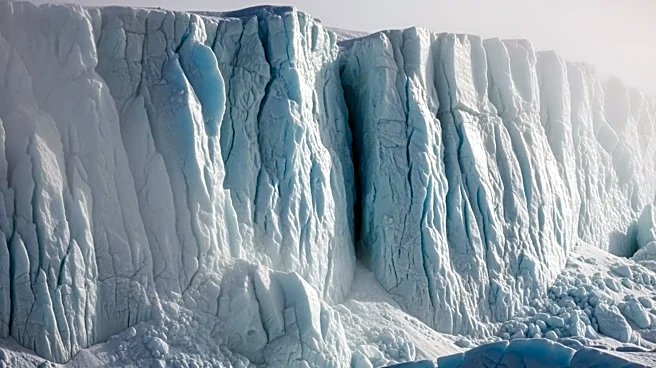
Sherpa teams on Mount Everest are facing significant challenges in resolving a blockage on the route to Camp 1 caused by a giant serac. This serac poses a threat of toppling, which could have fatal consequences for climbers below. Two official Sherpa teams,
one from the Sagarmatha Pollution Control Committee and another from the Expedition Operators Association, have been working to find a new route through the Khumbu Icefall but have been unsuccessful. An unofficial group of Sherpas, along with Polish skier Bartek Ziemski, has reportedly found and partially fixed a new route, although they had to turn back due to a whiteout. Meanwhile, authorities have allowed helicopters to transport gear and rope fixers to Camp 1, a move that could set a precedent for future operations.
Why It's Important?
The resolution of the Everest Icefall blockage is crucial for the safety and success of climbers attempting to summit the mountain. The blockage has caused delays, impacting climbers' acclimatization schedules and potentially leading to traffic jams once the route is opened. The use of helicopters to transport equipment is a significant development, as it could change the logistics of climbing Everest in the future. This situation highlights the ongoing challenges of managing safety and environmental concerns on one of the world's most popular climbing destinations.
What's Next?
If the new route to Camp 1 is confirmed safe, climbers will be able to proceed with their acclimatization schedules. However, the potential for traffic jams remains a concern, as many climbers are waiting at Base Camp. The decision to use helicopters could lead to discussions about their role in future climbing seasons. Authorities may also consider extending the climbing season to accommodate delays, but the arrival of the monsoon season will ultimately dictate the timeline.