
What's Happening?
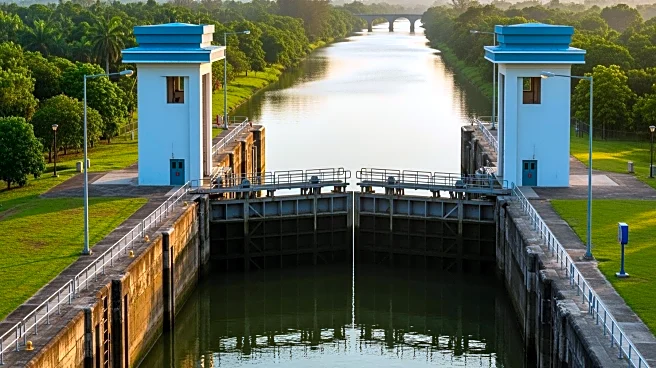
The Panama Canal Authority (ACP) has marked the 26th anniversary of the canal's transfer to Panamanian control, a significant event that took place on December 31, 1999. This milestone is celebrated as a testament
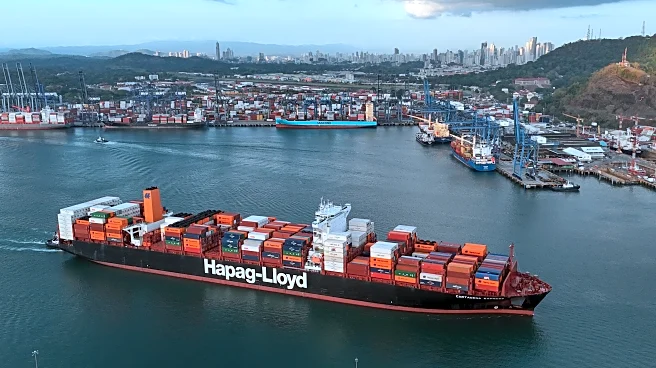
to Panama's ability to manage one of the world's most strategic maritime routes. Since the transfer, the canal has undergone significant developments, including a major expansion in 2016 that allowed for the passage of larger vessels, thereby enhancing its competitiveness in global trade. Over the years, the ACP has contributed over $31 billion to Panama's National Treasury, bolstering the country's economy and supporting social development initiatives. The Authority has also laid out a strategic roadmap for the next decade, focusing on projects like the Energy Corridor and port improvements, while emphasizing sustainability through water optimization and emission reduction programs.
Why It's Important?
The Panama Canal is a crucial artery in global maritime trade, and its efficient management is vital for international shipping and economic stability. The canal's expansion and strategic investments have not only strengthened Panama's economy but also reinforced its position as a key player in global logistics. The significant financial contributions to the National Treasury highlight the canal's role in supporting national development. Furthermore, the ACP's commitment to sustainability and community welfare reflects a forward-thinking approach that aligns with global environmental goals. These efforts ensure the canal's long-term viability and its ability to adapt to changing global trade dynamics, benefiting both Panama and the international community.
What's Next?
Looking ahead, the Panama Canal Authority plans to continue its strategic investments to maintain and enhance the canal's role in global trade. The roadmap for the next decade includes initiatives like the Energy Corridor and improvements to port infrastructure, which are expected to further boost the canal's capacity and efficiency. The ACP's focus on sustainability and resilience to climate change will likely involve more programs aimed at optimizing water use and reducing emissions. These efforts are crucial as the canal faces challenges such as fluctuating global trade patterns and environmental concerns. The Authority's ongoing commitment to community development in the canal's watershed area will also play a significant role in ensuring the well-being of local populations and the protection of vital water resources.
Beyond the Headlines
The Panama Canal's management under Panamanian control is a symbol of national pride and sovereignty. The successful administration of the canal has demonstrated Panama's capability to handle complex international operations, which has implications for its geopolitical standing. The canal's strategic importance means that its management decisions can have far-reaching effects on global trade routes and economic policies. Additionally, the ACP's focus on sustainability and innovation sets a precedent for other major infrastructure projects worldwide, highlighting the importance of balancing economic growth with environmental stewardship.