

What's Happening?
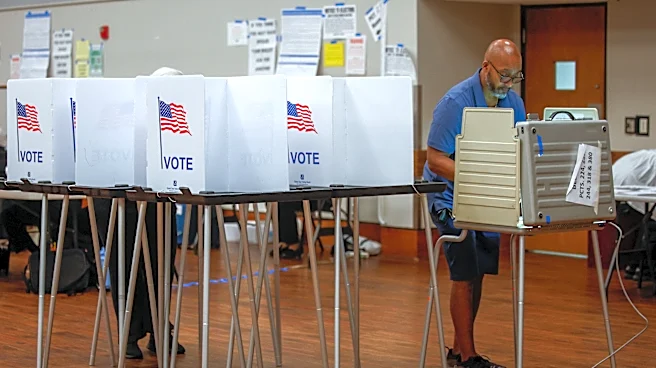
Voters in Missouri and Kansas have rejected ballot measures backed by Republican state legislatures that aimed to increase GOP influence. In Missouri, a proposal to make it harder for citizen-initiated amendments to pass was defeated. This measure would
have required such amendments to win in every congressional district, while legislature-proposed amendments needed only a statewide majority. In Kansas, voters turned down a proposal to change the process of appointing state Supreme Court justices, which would have allowed voters to elect justices, potentially leading to a court more aligned with anti-abortion views. These results reflect a pushback against efforts to limit direct democracy and maintain voter influence over state governance.
Why It's Important?
The rejection of these measures underscores the tension between Republican-controlled legislatures and citizen-driven initiatives, highlighting the importance of direct democracy in shaping state policies. By defeating these proposals, voters in Missouri and Kansas have preserved their ability to influence state laws directly, countering legislative attempts to consolidate power. This outcome is significant for maintaining checks and balances within state governments, ensuring that citizens retain a voice in critical issues such as abortion rights and gerrymandering. The results also signal a broader trend of voters resisting efforts to curtail their democratic rights, which could influence future legislative strategies and political dynamics in other states.
What's Next?
Following these defeats, Republican legislatures in Missouri and Kansas may seek alternative methods to achieve their policy goals, potentially through legislative action or new ballot measures. Supporters of the rejected proposals might challenge the results in court or attempt to reintroduce similar measures in future elections. Meanwhile, citizen groups and advocacy organizations are likely to continue mobilizing to protect and expand direct democracy mechanisms. The ongoing debate over voter influence and legislative power could lead to further political and legal battles, shaping the landscape of state governance and citizen participation in the coming years.