







What's Happening?
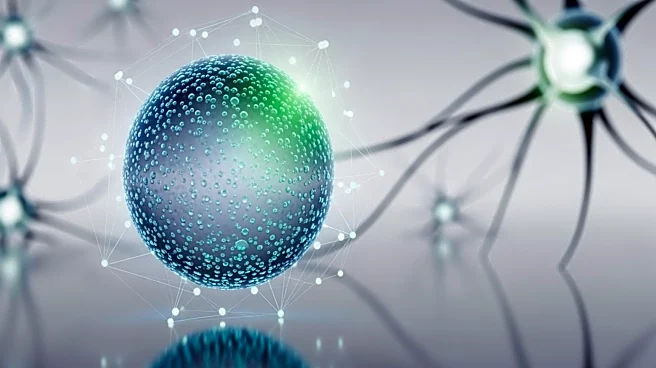
Recent research highlights the potential of nanoparticles (NPs) in treating psychiatric and neurological disorders. The study focuses on four primary classes of NPs: lipid-based, polymeric, inorganic, and hybrid. These nanoparticles are designed to improve
drug delivery to the brain, overcoming the blood-brain barrier (BBB) that often limits the effectiveness of conventional treatments. Lipid-based NPs, such as liposomes and lipid nanoparticles (LNPs), offer high biocompatibility and are ideal for nucleic-acid therapeutics. Polymeric NPs, made from natural or synthetic polymers, provide diverse compositions for drug delivery. Inorganic NPs, including gold and silica nanoparticles, are used for intracerebral delivery and imaging. Hybrid NPs combine different materials to enhance delivery efficiency and biocompatibility. The study suggests that these nanoparticles can improve the delivery of therapeutic agents to the central nervous system (CNS) without compromising BBB integrity, offering a promising path for more effective treatment of CNS disorders.
Why It's Important?
The development of nanoparticle-based treatments for psychiatric and neurological disorders could significantly impact the healthcare industry by providing more effective and targeted therapies. These disorders, including depression, schizophrenia, Alzheimer's disease (AD), and Parkinson's disease (PD), are among the leading causes of disability worldwide. Current treatments often struggle to cross the BBB, limiting their effectiveness. Nanoparticles offer a solution by enabling targeted delivery of drugs to the brain, potentially improving therapeutic outcomes and reducing side effects. This advancement could lead to better management of these disorders, improving the quality of life for millions of patients. Additionally, the use of nanoparticles in diagnostics could enhance early detection and monitoring of these conditions, further improving treatment outcomes.
What's Next?
Further research and clinical trials are needed to fully understand the potential of nanoparticles in treating psychiatric and neurological disorders. While initial studies are promising, larger, well-controlled studies are necessary to validate these findings and ensure the safety and efficacy of nanoparticle-based therapies. Regulatory considerations, such as manufacturing scalability and quality control, will also play a crucial role in the development and approval of these treatments. As research progresses, collaboration between scientists, healthcare providers, and regulatory agencies will be essential to bring these innovative therapies to market and integrate them into clinical practice.
Beyond the Headlines
The use of nanoparticles in treating psychiatric and neurological disorders raises important ethical and regulatory questions. Ensuring patient safety and addressing potential long-term effects of nanoparticle exposure are critical considerations. Additionally, the cost and accessibility of these advanced treatments could impact healthcare equity, highlighting the need for policies that ensure broad access to these innovations. The integration of nanotechnology into healthcare also requires careful consideration of data privacy and security, particularly in the context of diagnostic applications that involve sensitive patient information.