





What's Happening?
Catawba College in Salisbury, North Carolina, is demonstrating leadership in clean energy innovation through various campus-wide initiatives. The college achieved carbon neutrality in 2023 and continues to implement projects such as CatawbaGO, a free
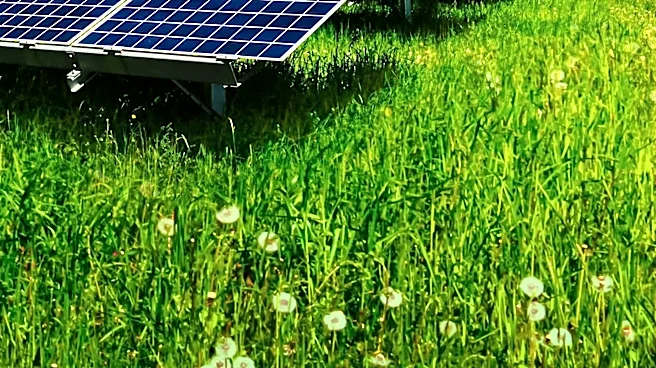
electric van rideshare service that has completed over 17,000 rides since August 2025. The college's Centennial Hall is North Carolina's first residence hall built to Passive House standards, designed to be up to 70% more efficient than similar buildings, serving as a living-learning laboratory for students. Catawba College also participated in its first American Solar Challenge with a student-led solar racing team, fostering practical mechanical skills and teamwork. Additionally, the college is repurposing its retired coal-fired power plant smokestack into a net-zero, carbon-neutral commons, aiming for LEED Platinum and Living Building Challenge certifications, and incorporating a battery fed by a 60 kW solar array for resilience.
Why It's Important?
Catawba College's initiatives are important as they provide a tangible model for how educational institutions can actively contribute to the clean energy transition. By integrating clean energy solutions into daily campus life, infrastructure, and curriculum, the college is not only reducing its carbon footprint but also educating and inspiring future generations. The CatawbaGO rideshare service demonstrates a practical, cost-effective approach to sustainable transportation that can be replicated by other institutions and communities. The Centennial Hall project showcases advanced energy-efficient building design, offering valuable data and educational opportunities. The solar racing team fosters hands-on learning and problem-solving skills in renewable energy. The repurposing of the coal plant smokestack symbolizes a powerful transformation from fossil fuels to sustainable energy, highlighting the potential for innovative reuse of existing infrastructure. These efforts collectively contribute to regional and national clean energy goals.
What's Next?
CatawbaGO is set to continue for up to three more years, with potential expansion beyond its current two vehicles. Centennial Hall will undergo performance testing to achieve its PHIUS certification, with students actively participating in monitoring and learning from its energy efficiency. The solar racing team is already preparing for next year's American Solar Challenge, aiming for a stronger performance. The Smokestack project will continue its development towards becoming a net-zero commons, with its completion expected to further solidify Catawba's commitment to sustainability. These ongoing projects will likely generate more data, best practices, and educational content, further establishing Catawba College as a leader in clean energy and sustainability education.
Beyond the Headlines
Catawba College's comprehensive approach to clean energy extends beyond mere compliance with environmental standards; it integrates sustainability into the very fabric of its institutional identity and educational mission. By turning its campus into a living laboratory, the college is creating a unique learning environment where students gain practical experience and develop a deep understanding of clean energy technologies and their societal impact. This holistic model can inspire other colleges and universities to adopt similar strategies, fostering a new generation of professionals equipped to tackle climate change challenges. The college's success also demonstrates that clean energy initiatives can be economically viable and enhance community well-being, challenging the perception that sustainability comes at a prohibitive cost. The transformation of the coal plant smokestack, in particular, offers a powerful narrative of redemption and progress, showcasing how historical industrial sites can be reimagined for a sustainable future.