
What's Happening?
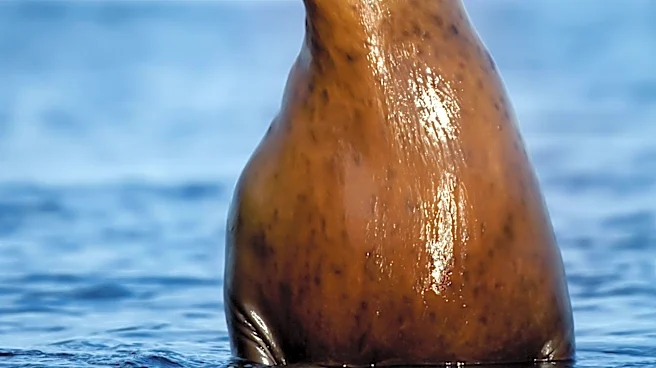
A bipartisan bill has been introduced in the U.S. House to allow Washington State and treaty tribes to manage sea lion populations under specific conditions. The bill, co-sponsored by Michael Baumgartner,
a Republican from Spokane, and Emily Randall, a Democrat from the Olympic Peninsula, aims to address the impact of sea lions on salmon recovery efforts. Washington is currently spending billions on a salmon recovery program mandated by a federal court order, but sea lions have been identified as a significant obstacle to these efforts. The bill proposes humane removal of sea lions in specific areas, with an annual cap on removals to ensure population stability. The initiative is supported by various stakeholders, including the Northwest Indian Fisheries Commission and the Washington Department of Fish and Wildlife.
Why It's Important?
The proposed legislation is significant as it addresses the ongoing conflict between wildlife conservation and species recovery efforts. Sea lions, protected under the Marine Mammal Protection Act, have been thriving, but their predation on salmon poses a threat to the already struggling salmon populations. The bill seeks to balance the protection of sea lions with the urgent need to restore salmon runs, which are crucial for the ecosystem and the livelihoods of local communities, including indigenous tribes. The outcome of this legislation could set a precedent for managing similar conflicts between protected species and endangered species recovery efforts.
What's Next?
If passed, the bill would allow for the issuance of permits to remove sea lions in areas where they are impacting salmon recovery. The removals would be conducted by state and tribal professionals, ensuring humane practices. The bill includes provisions for ongoing scientific assessment to determine the necessity of continued removals. The legislation is expected to face scrutiny from conservation groups and could spark debates on wildlife management policies. The outcome will likely influence future legislative approaches to balancing species protection with ecological restoration.