







What's Happening?
The United States, the European Union, and 30 other countries have issued a joint statement warning of an alarming deterioration in food security in Sudan, indicating a high risk of famine in the coming months. The statement, released by the US State Department,
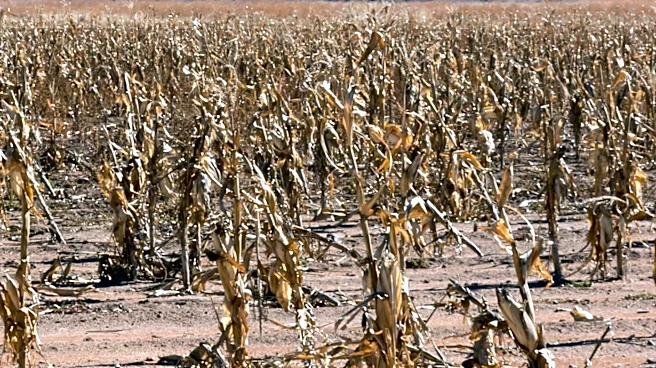
urges all warring factions in Sudan to immediately remove impediments to humanitarian assistance. The Integrated Food Security Phase Classification (IPC) has highlighted the urgent need for action, noting that 5.1 million people in Sudan were already facing severe hunger in June. The ongoing conflict between the Sudanese army and the paramilitary Rapid Support Forces, which began in April 2023, has resulted in thousands of deaths and displaced over 13 million people, creating a significant humanitarian crisis. Farmers are struggling to harvest crops, and a drought linked to El Niño has further exacerbated the situation by driving up food prices and reducing supplies. Without immediate intervention, the number of children suffering from severe acute malnutrition is projected to exceed 825,000.
Why It's Important?
This joint warning from the US, EU, and other international partners underscores the severe humanitarian catastrophe unfolding in Sudan. The potential for widespread famine has dire implications for regional stability and global humanitarian efforts. The conflict's impact on food production and supply chains, coupled with environmental factors like drought, creates a complex crisis that demands immediate international attention and funding. The displacement of millions of people not only exacerbates food insecurity but also places immense strain on neighboring countries and international aid organizations. The call for warring factions to lift humanitarian aid impediments is crucial, as access restrictions directly hinder efforts to deliver life-saving assistance. Failure to address this crisis could lead to a significant increase in mortality rates, particularly among vulnerable populations like children, and further destabilize an already fragile region.
What's Next?
The international community is calling for an urgent scale-up of funding to address the escalating needs in Sudan and ensure assistance reaches those most in need. The signatories of the joint statement are pressing the warring factions to allow humanitarian operations through all routes, including across front lines and borders, and to permit air access to the Darfur region. Continued diplomatic pressure from the US, EU, and other nations will be essential to secure these access agreements. Aid organizations will likely intensify their efforts to deliver food, medical supplies, and other essential aid, but their effectiveness will depend heavily on the cooperation of the conflicting parties. The situation will require ongoing monitoring by organizations like the IPC to track food security levels and guide response efforts. The long-term resolution of the conflict is paramount to preventing future famines and enabling sustainable recovery.
Beyond the Headlines
The looming famine in Sudan highlights the devastating intersection of conflict, climate change, and political instability. Beyond the immediate humanitarian crisis, the situation raises profound questions about the responsibility of warring parties to protect civilian populations and adhere to international humanitarian law. The displacement of 13 million people represents a massive societal upheaval, with long-term consequences for social cohesion, economic development, and regional migration patterns. The reliance on external aid underscores the fragility of food systems in conflict zones and the urgent need for sustainable peacebuilding efforts. The crisis also serves as a stark reminder of the global interconnectedness of food security, as disruptions in one region can have ripple effects on international aid budgets and global food prices. Addressing the root causes of conflict and investing in climate resilience will be critical to preventing similar catastrophes in the future.