
What's Happening?
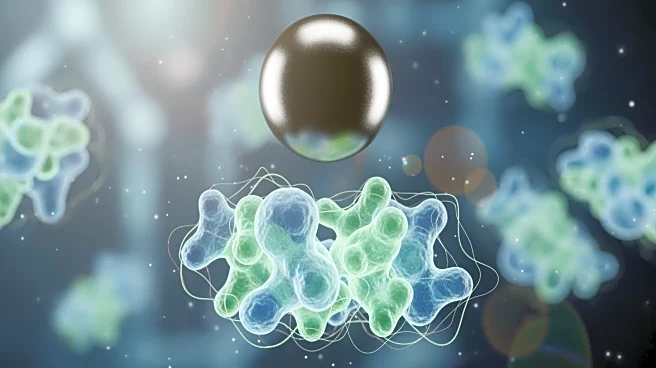
Researchers have engineered fluorescent proteins that can be controlled magnetically, allowing them to be dimmed and brightened in living cells and animals. This development, published in Nature, aims
to create a toolbox of magnetically remote-controlled protein functions. The study, led by Andrew York at the Chan Zuckerberg Biohub, demonstrates the potential of these proteins as biosensors or therapies that can be activated or deactivated as needed. The research builds on previous findings that green fluorescent protein dims in the presence of a weak magnet, leading to the creation of a more responsive protein, MagLOV, which dims significantly in a magnetic field.
Why It's Important?
The ability to control proteins remotely using magnets could revolutionize the field of molecular biology, offering new ways to study and manipulate cellular processes. This technology could lead to the development of advanced biosensors and targeted therapies, providing precise control over biological functions. The research highlights the potential for quantum effects to be harnessed in biological systems, opening new avenues for scientific exploration and medical applications. The findings could have significant implications for biotechnology and medicine, particularly in developing non-invasive diagnostic and therapeutic tools.