






What's Happening?
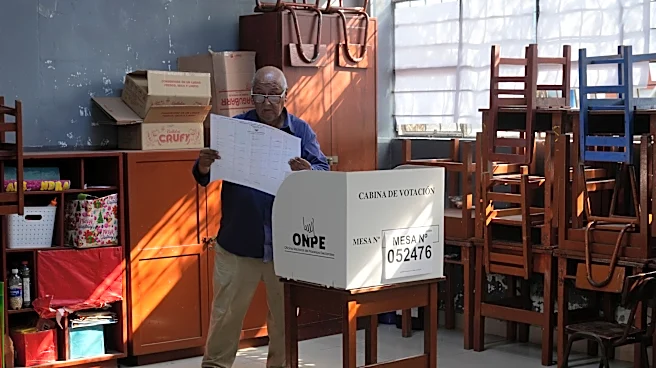
Peru is holding a presidential election with 35 candidates vying to become the country's ninth president in a decade. The election occurs against a backdrop of increasing violent crime and corruption, which has led to widespread voter discontent. Among
the candidates are Keiko Fujimori, a former congresswoman and daughter of ex-President Alberto Fujimori, and Rafael López Aliaga, a former mayor of Lima. The election is marked by proposals to combat crime, including building megaprisons and reinstating the death penalty. Voting is mandatory for Peruvians aged 18 to 70, with over 27 million registered voters. A runoff is likely due to the divided electorate.
Why It's Important?
The election is significant as it reflects the deep political instability in Peru, with frequent changes in leadership over the past decade. The outcome could impact Peru's approach to crime and corruption, which are major public concerns. The election also introduces a new bicameral Congress, which could alter the balance of power and legislative processes in the country. The political landscape in Peru is crucial for regional stability in South America, and the election results could influence economic and social policies affecting millions of Peruvians.
What's Next?
A runoff election is expected in June due to the large number of candidates and divided voter base. The new bicameral Congress will begin its term, potentially reshaping legislative dynamics. The elected president will face the challenge of addressing crime and corruption while navigating a complex political environment. International observers will likely monitor the election process and its aftermath, given Peru's strategic importance in the region.