



What's Happening?
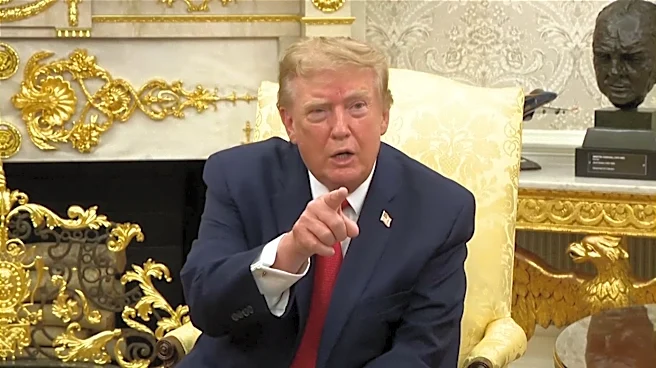
The White House's 'Rapid Response' team publicly criticized CNN reporter Kristen Holmes on August 17 after she questioned President Trump about his relationship with executive assistant Natalie Harp. During an event in the Oval Office, Holmes asked President Trump to
respond to comments made by a Democratic lawmaker concerning Harp. The White House team posted on X, stating, 'Someday, your children will come across your disgusting and inhumane question,' and linked to a video of President Trump's response. President Trump himself later called Holmes 'very disrespectful' when she attempted to ask a question about North Korea. CNN issued a statement defending Holmes, asserting that the attacks were 'beneath the office' and that they 'stand firmly behind Kristen and reject these attacks in the strongest possible terms.' Natalie Harp has recently been the subject of internet commentary, particularly after she was noted as one of the few aides present with President Trump during a secret Air Force One swap in July. Democratic Senator Jon Ossoff, a potential 2028 presidential candidate, had accused President Trump in an August 16 campaign speech of prioritizing building his ballroom and traveling with Harp over his official duties. President Trump dismissed Ossoff's comments and defended his White House ballroom construction but did not address Harp directly.
Why It's Important?
This incident highlights ongoing tensions between the White House and certain media outlets, particularly CNN, and underscores a broader pattern of the administration's confrontational approach towards journalists. The public condemnation of a reporter by the White House's official 'Rapid Response' team, coupled with President Trump's direct verbal attacks, can be seen as an attempt to delegitimize critical reporting and control narratives. This dynamic can erode public trust in the media and create a chilling effect on journalistic inquiry, especially when questions touch on sensitive personal or political matters. For the U.S. political landscape, such interactions contribute to an increasingly polarized environment where the line between legitimate press scrutiny and perceived political attacks becomes blurred. The incident also raises questions about the role of presidential aides and the scrutiny they face, particularly when their proximity to the President becomes a subject of public and political discussion. The defense of Harp by the White House, including the use of strong language against a senator, further illustrates the administration's aggressive stance against perceived adversaries.
What's Next?
Given the established pattern of interactions between the White House and the press, similar confrontations are likely to continue. Media organizations, including CNN, are expected to maintain their stance in defending their reporters and their right to ask challenging questions. The White House will likely persist in its strategy of directly engaging with and criticizing journalists it deems unfair or biased. This ongoing tension could further strain the relationship between the executive branch and the press, potentially leading to more restricted access for certain reporters or outlets. The Democratic lawmaker's comments about Natalie Harp, and the White House's reaction, suggest that the personal lives and associations of political figures and their staff may continue to be subjects of political discourse, especially as the 2028 presidential election cycle approaches. The incident may also prompt further discussions within media ethics circles regarding the appropriate boundaries of questioning public figures and their staff.
Beyond the Headlines
This event delves into deeper implications concerning the freedom of the press and the executive branch's power to influence public perception of media. The White House's use of social media platforms like X for direct attacks on journalists represents a modern tactic to bypass traditional media filters and communicate directly with the public, potentially shaping public opinion against critical reporting. This strategy can undermine the traditional role of the press as a watchdog and foster an environment where journalists are viewed with suspicion. The incident also touches upon the ethical considerations of reporting on the personal relationships of public officials, particularly when those relationships are brought into political discourse by other public figures. The 'human printer' moniker for Natalie Harp and the reported 'adoring letters' highlight the blurred lines between professional and personal roles within a high-stakes political environment, raising questions about the nature of loyalty and influence in presidential administrations. The broader cultural implication is a continued erosion of civility in public discourse and an increasing normalization of aggressive rhetoric from official channels.