



What's Happening?
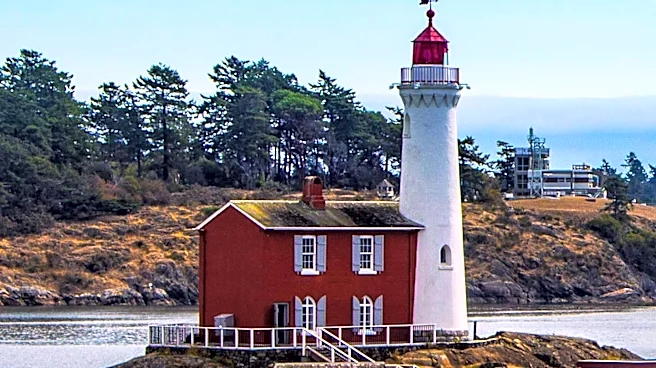
A recent visit to the 1000 Islands region uncovered several surprising historical facts. Among them, it was revealed that the first lighthouse keeper in the area was a former pirate named 'Pirate' Bill Johnston. In the 1800s, Johnston was known for raiding
ships along the St. Lawrence River and famously burned a British steamship during U.S.-Canada border tensions. Despite his past, he became a folk hero and was later appointed as a lighthouse keeper, transitioning from terrorizing waterways to guiding ships safely. Additionally, the 1000 Islands region is home to the world's shortest international bridge, connecting the U.S. and Canada with a span of just a few feet. The region, despite its name, actually comprises 1,864 islands, with the 'thousand' being an expression of abundance by French explorers rather than an exact count. To qualify as a legitimate island, a piece of land must support at least two trees and remain above the waterline year-round.
Why It's Important?
These historical revelations from the 1000 Islands region offer unique insights into U.S.-Canada relations and the cultural heritage of border communities. The story of 'Pirate' Bill Johnston highlights the complex and often colorful history of the U.S.-Canada border, where figures with unconventional pasts could transition into roles of public service. This narrative enriches the understanding of early American and Canadian frontier life, demonstrating how local heroes emerged from periods of tension. The presence of the world's shortest international bridge symbolizes the unique and often intimate connections between the two nations, underscoring their long-standing relationship and shared geography. For tourism and local economies, these distinctive historical facts provide compelling narratives that attract visitors, contributing to the region's cultural and economic vitality.
What's Next?
The historical anecdotes from the 1000 Islands are likely to continue to be a point of interest for tourists and local historians. These stories could be further integrated into educational programs and interpretive displays within the region, enhancing the visitor experience. Local tourism boards and historical societies may leverage these unique facts, such as the pirate lighthouse keeper and the shortest international bridge, in their promotional materials to attract more visitors. Research into 'Pirate' Bill Johnston's life and the specific context of U.S.-Canada border tensions in the 1800s could yield further historical insights. The ongoing preservation of the islands and their unique qualifying criteria will also remain a focus for environmental and conservation efforts in the area.
Beyond the Headlines
The narrative of 'Pirate' Bill Johnston serving as a lighthouse keeper delves into the deeper themes of redemption, local justice, and the formation of folk heroes in frontier societies. It challenges conventional notions of law and order, illustrating how community perception and historical context can shape an individual's legacy. This story also subtly reflects the fluid nature of national identities and allegiances during periods of border disputes. The 'shortest international bridge' serves as a powerful metaphor for the often-overlooked, yet significant, micro-interactions and connections that define international relations at a local level. These elements collectively contribute to a richer understanding of American and Canadian cultural identity, demonstrating how historical events and figures continue to resonate in contemporary consciousness and shape regional narratives.