



What's Happening?
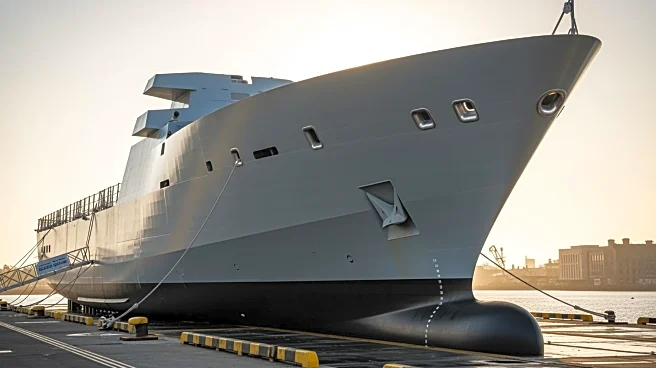
Austal USA has successfully launched the U.S. Navy's final Expeditionary Fast Transport (EPF), the future USNS Lansing (EPF 16), in Mobile, Alabama. This marks the 16th EPF for the Navy, which was christened in early January and is now docked for final outfitting
and system activation. The launch involved moving the ship using self-propelled modular transporters onto a deck barge, which then transported it downriver to a floating dry dock. This process allowed the ship to float for the first time before being returned to Austal USA's construction facility. The launch is a testament to the collaborative efforts of Austal USA's teams and their partners, including Berard Transportation and Alabama Shipyard, to refine shipbuilding processes and achieve critical milestones.
Why It's Important?
The launch of the future USNS Lansing is significant for the U.S. Navy's operational capabilities, particularly in terms of rapid deployment and logistical support. The EPF class of ships is designed to transport troops, equipment, and vehicles quickly, enhancing the Navy's ability to respond to global missions. This development also underscores the importance of the maritime industrial base in supporting national defense objectives. The successful collaboration between Austal USA and its partners highlights the strength of the U.S. shipbuilding industry and its capacity to deliver advanced naval vessels. This project not only supports military readiness but also contributes to the local economy by sustaining jobs and fostering technological advancements in shipbuilding.
What's Next?
Following the launch, the future USNS Lansing will undergo final outfitting and system activation in preparation for sea trials later this year. These trials are crucial for testing the ship's capabilities and ensuring it meets the Navy's operational requirements. The focus will be on the ship's performance, safety, and readiness for deployment. As the third EPF Flight II medical variant, the Lansing will also be equipped to provide medical support, which is an essential capability for humanitarian missions and disaster response. The successful completion of sea trials will pave the way for the ship's commissioning and integration into the Navy's fleet.