



What's Happening?
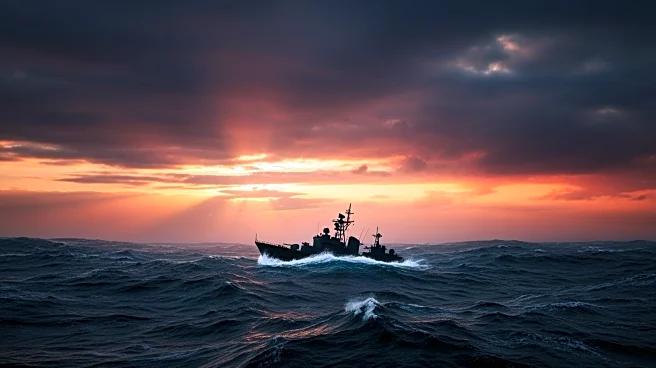
The ongoing U.S.-Iran conflict has intensified following a U.S. submarine strike on an Iranian warship near Sri Lanka, exacerbating a shipping crisis in the Strait of Hormuz. This critical waterway, responsible for a significant portion of the world's
oil and LNG supply, has been paralyzed for five days, affecting over 200 ships. The disruption has led to force majeure declarations by major energy companies and a surge in global energy prices. President Trump has pledged to provide insurance and naval escorts to ensure the continued flow of energy exports from the Middle East, as the crisis impacts global oil markets and supply chains.
Why It's Important?
The shipping crisis in the Strait of Hormuz has significant implications for global energy markets and geopolitical stability. The disruption of oil and gas flows from the Middle East, a key supplier to Asia and other regions, has led to increased energy prices and supply chain challenges. The U.S. response, including military action and financial guarantees, underscores the strategic importance of the region and the potential for further escalation. The situation highlights the vulnerability of global energy infrastructure to geopolitical tensions and the need for diversified energy sources and routes.
What's Next?
As the crisis unfolds, the international community will closely monitor developments in the Gulf region. The U.S. and its allies may increase military presence to secure shipping lanes, while affected countries seek alternative energy sources. The potential for further conflict and its impact on global energy markets will be a key concern for policymakers and industry stakeholders. The situation may prompt discussions on energy security and the need for resilient supply chains to mitigate the effects of geopolitical disruptions.