








What's Happening?
American technology entrepreneur Austin McChord and his wife, Allison, have secured unanimous approval from the Norwalk Planning and Zoning Commission for their $410 million plan to transform a former power plant site in Norwalk, Connecticut, into a 125-acre
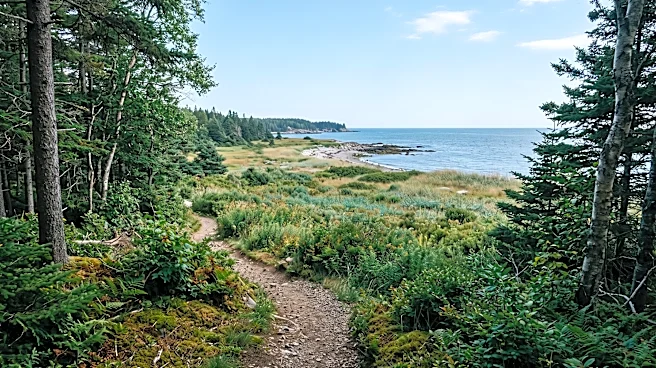
public park and nature center. The project, named Manresa Wilds, involves creating a special zoning district for the site, which was previously home to the Norwalk Harbor Generating Station. The McChords are funding the initiative through Manresa Island Corp., a charity established to manage the site's cleanup. This initial estimate covers land acquisition, contamination removal, infrastructure development, and shoreline restoration. The project is anticipated to be the largest privately funded environmental cleanup and public park endeavor in Connecticut's history. The first phase, a 28-acre Northern Forest with trails and outdoor classrooms, is already under construction and slated to open in 2027. Subsequent phases include converting the plant's turbine hall into event space, a cafe, and a restaurant by 2032, with the full park expected to be operational by 2035.
Why It's Important?
This project holds significant importance for Connecticut, particularly for environmental restoration and public access to natural spaces. The transformation of a long-shuttered, contaminated industrial site into a public park addresses critical environmental concerns, including the cleanup of coal ash fill and the restoration of a shoreline that has been inaccessible for nearly 75 years. The substantial private funding commitment by the McChords sets a precedent for large-scale environmental initiatives, potentially inspiring similar private-public partnerships for ecological restoration across the U.S. Economically, the development could boost local tourism and create jobs during construction and operation. Socially, it provides a much-needed recreational and educational resource for the community, enhancing quality of life and offering a unique natural retreat. The project also demonstrates how private wealth can be leveraged for significant public good, particularly in areas where government funding might be limited.
What's Next?
Following the unanimous approval, the McChords will proceed with refining their designs for the subsequent phases of the Manresa Wilds project. Each future phase will require separate applications and traffic studies to be submitted to the Norwalk Planning and Zoning Commission for review. The first phase, the Northern Forest, is already under construction and is expected to open in 2027. The second phase, targeting a 2032 completion, will focus on converting existing structures into public amenities and restoring wetlands. A waterfront promenade and pier are also planned, with the entire park projected to be open by 2035. The state Office of State Traffic Administration is also expected to review the project, particularly concerning traffic management, which remains a concern for local residents. The Manresa Association, a neighborhood group, has indicated they will continue to monitor traffic impacts as later phases are reviewed.
Beyond the Headlines
The Manresa Wilds project transcends a typical park development, representing a profound shift in land use and environmental stewardship. It highlights the potential for private philanthropy to tackle complex environmental challenges that might otherwise languish due to public funding constraints or political inertia. The transformation of a former power plant, a symbol of industrialization and its environmental toll, into a vibrant natural space offers a powerful narrative of ecological redemption and community revitalization. This initiative could serve as a model for other communities grappling with legacy industrial sites, demonstrating that even heavily contaminated areas can be reclaimed and repurposed for public benefit. Furthermore, the project's emphasis on public access to a previously restricted waterfront area underscores a growing societal value placed on environmental equity and the right to enjoy natural resources, fostering a deeper connection between residents and their local ecosystems.