






What's Happening?
The U.S. Department of Interior’s Bureau of Land Management has leased nearly 3,000 acres of the Wayne National Forest in Ohio for oil and gas development. This decision followed an announcement in July and a mandatory protest period, culminating in an online
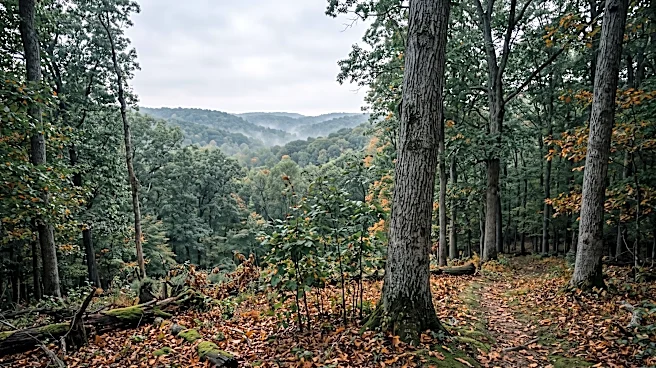
auction where 40 parcels were sold for over $11 million. The highest bid reached nearly $10,000 per acre for a parcel in Monroe County. Critics, including Nathan Johnson, attorney of land and water for the Ohio Environmental Council, warn that this development could significantly impact the region through increased pipelines, well pads, truck traffic, and air pollution. Ecologist Glen Matlack of Ohio University notes that the area has not fully recovered from past deforestation in the 19th and 20th centuries due to logging, mining, and farming industries. The Wayne National Forest is also home to endangered species like the Indiana Bat, which federal laws protect. The Ohio Environmental Council has filed a lawsuit, alleging violations of environmental laws and plans to file another suit following the auction.
Why It's Important?
This auction represents a significant shift in land use for a national forest, prioritizing energy development over conservation in a federally protected area. The move could have substantial environmental consequences, including habitat destruction for endangered species like the Indiana Bat, increased air pollution, and potential long-term ecological damage to a forest still recovering from historical deforestation. From an economic perspective, the sale generated over $11 million, and industry officials, such as Mike Chadsey of the Ohio Oil and Gas Association, argue that it helps meet national energy needs and provides economic benefits to the state through manufacturing feedstock. However, environmental groups contend that the economic gains do not outweigh the ecological risks. The decision also highlights the ongoing tension between resource extraction and environmental protection on public lands, setting a precedent for future land management decisions across the U.S. The potential for increased truck traffic and infrastructure development could also impact local communities and their quality of life.
What's Next?
Following the auction, companies that leased the land must still submit drilling permit applications, which the Bureau of Land Management must approve. This approval process will be the next critical step, and it is expected to face continued scrutiny and potential legal challenges from environmental organizations like the Ohio Environmental Council. The Council has already filed a lawsuit alleging environmental law violations and plans to file another. The Bureau of Land Management's environmental studies, which critics claim neglected to fully consider the impact on air quality, will likely be a focal point of these legal battles. The outcome of these permit applications and legal challenges will determine the extent and pace of oil and gas development within the Wayne National Forest. Additionally, the situation may prompt further public discourse and advocacy regarding the management of national forests and the balance between energy development and environmental conservation.
Beyond the Headlines
The auction of nearly 3,000 acres of the Wayne National Forest for oil and gas development underscores a broader national debate about the purpose and future of public lands. While proponents emphasize energy independence and economic benefits, critics highlight the irreversible ecological damage and the potential loss of biodiversity. This event brings to the forefront the ethical considerations of exploiting natural resources in protected areas, especially given the forest's history of deforestation and its slow recovery. The legal challenges raised by the Ohio Environmental Council also point to the critical role of environmental regulations and judicial oversight in safeguarding public lands. The decision could influence how other national forests are managed, potentially leading to similar auctions in other states. It also raises questions about the long-term sustainability of such practices and their alignment with broader climate and conservation goals, impacting not only the immediate environment but also the cultural and recreational value of these natural spaces for future generations.