






What's Happening?
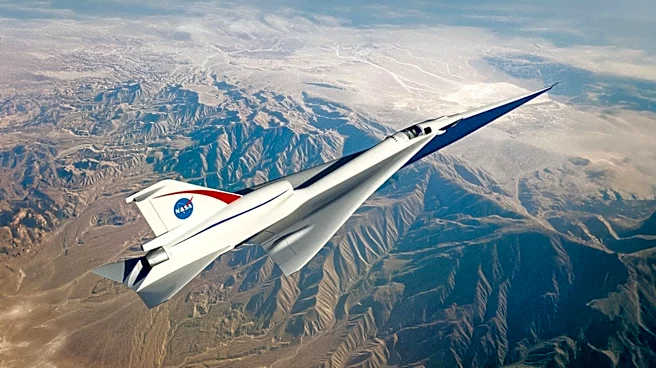
NASA has conducted a series of tests on a new wing design, known as the Structural Wing Experiment Evaluating Truss-bracing (SWEET-15), to determine its structural limits. The design features a long, thin wing supported by an aerodynamic strut, aimed
at improving fuel efficiency for future aircraft. The tests, conducted at NASA's Armstrong Flight Research Center, involved pushing the wing beyond its intended limits to assess its performance under stress. The results showed that the wing withstood anticipated forces, providing confidence in the design's potential for commercial aviation.
Why It's Important?
The development of more efficient aircraft designs is crucial for reducing the aviation industry's environmental impact. By improving fuel efficiency, the SWEET-15 design could lead to significant reductions in carbon emissions and operational costs for airlines. This research supports NASA's broader goals of advancing aeronautics technology and promoting sustainable aviation. The successful testing of the wing design also highlights the potential for innovative manufacturing techniques to produce lighter and stronger aerospace structures.
What's Next?
NASA researchers will analyze the data collected during the tests to refine the wing design and inform future airframe developments. The insights gained from this research will contribute to ongoing efforts to create ultra-efficient aircraft, with potential applications in both commercial and military aviation. Further testing and collaboration with industry partners may lead to the integration of these technologies into next-generation aircraft designs.