




What's Happening?
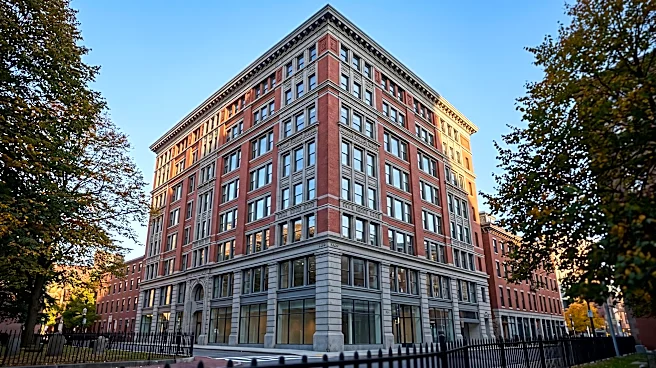
Suffolk University has officially opened its sixth residence hall at 101 Tremont Street in downtown Boston. This 11-story, 88,000-square-foot building is one of the city's first office-to-dorm conversions. The new residence hall initially houses 80 student
residents and is projected to accommodate 280 students by next fall. University, state, and city officials, including President Marisa Kelly, Representative Aaron Michlewitz, and Sheila Dillon, chief of housing for the City of Boston, gathered on September 30 to celebrate this milestone with a ceremonial ribbon-cutting. The building, formerly known for housing the Beantown Pub, is located directly across from the historic Granary Burying Ground on Boston’s Freedom Trail. The two-year renovation process preserved the building's historic character while upgrading its accessibility and utility systems.
Why It's Important?
The opening of Suffolk University's new residence hall is significant for several reasons, particularly in the context of Boston's urban development and housing market. This project contributes to the revitalization of downtown Boston by converting a commercial office space into residential use, addressing the issue of commercial vacancies. Furthermore, it helps alleviate the intense pressure on the city's housing supply, which is strained by a large student population of over 37,000. By providing more on-campus housing, Suffolk University aims to reduce the demand for off-campus rentals, potentially mitigating some of the highest housing costs in the country. City officials, including Sheila Dillon, emphasized the importance of retaining college graduates in Boston, and providing a positive college experience, including housing, is seen as crucial to achieving this goal.
What's Next?
The new residence hall at 101 Tremont Street will gradually increase its student occupancy, with plans to house 280 Rams by next fall. This expansion will further contribute to Suffolk University's presence along Tremont Street, creating a more integrated campus corridor. The success of this office-to-dorm conversion may serve as a model for future urban development projects in Boston and other cities facing similar challenges of commercial vacancies and housing shortages. Continued collaboration between universities and city officials will likely focus on sustainable urban planning and housing solutions to support both academic institutions and the broader community. The university will also continue to integrate its students into the city's fabric, leveraging Boston's energy and industries as part of its learning platform.
Beyond the Headlines
This development highlights a broader trend in urban planning where underutilized commercial spaces are being repurposed to address contemporary urban challenges. The conversion of 101 Tremont Street reflects a strategic response to the evolving needs of both educational institutions and urban centers. Beyond the immediate impact on student housing, this project underscores the potential for adaptive reuse to foster economic vitality and community development. It also raises questions about the long-term implications of such conversions on the character of historic districts and the balance between preserving heritage and accommodating modern demands. The initiative demonstrates a commitment to creating vibrant, walkable urban campuses that integrate seamlessly with the surrounding city, fostering a dynamic environment for students and residents alike.