






What's Happening?
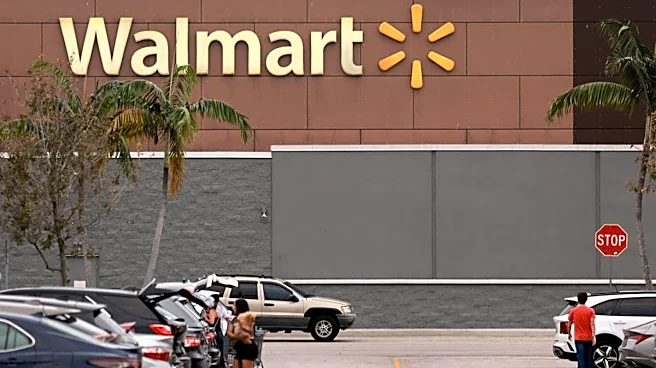
Atlanta Mayor Andre Dickens played a role in the decision to rebuild a Walmart store on Martin Luther King, Jr. Drive in the Vine City neighborhood after it was destroyed by arson approximately four years ago. Initially, Walmart had decided not to rebuild this
location, nor another one on Howell Mill Road that was also damaged by fire. However, following an appeal to Mayor Dickens and a vigil held by Vine City residents, who depend on the store for groceries and medications, Walmart reversed its decision. The rebuilt store is now a 'Walmart Neighborhood Market,' focusing on a wider assortment of groceries, fresh produce, and a larger pharmacy. This outcome highlights the impact of civic engagement and community advocacy in addressing essential needs, particularly for vulnerable populations like college students and the elderly who rely on local access to goods.
Why It's Important?
The rebuilding of the Walmart in Vine City underscores the critical role of local government and community activism in maintaining essential services within urban neighborhoods. For residents of Vine City, a predominantly Black and mixed-income area, the Walmart serves as a vital resource for daily necessities, including food and prescriptions. Its absence would have forced many to travel significant distances, creating hardship for those without reliable transportation. This situation illustrates how local political engagement can directly influence corporate decisions that affect community well-being and economic stability. The outcome also demonstrates that when communities organize and voice their needs, local leaders can facilitate solutions that benefit residents, even when large corporations initially decide against reinvestment.
What's Next?
The successful rebuilding of the Walmart Neighborhood Market in Vine City sets a precedent for how community advocacy and mayoral intervention can address local needs. This event may encourage other communities facing similar challenges to engage with their local governments and corporations to advocate for essential services. For Mayor Dickens, this outcome reinforces the importance of responsiveness to constituent concerns and highlights the tangible benefits of civic engagement. Future urban development and retail decisions in Atlanta may be influenced by this example, potentially leading to more collaborative approaches between city officials, residents, and businesses to ensure equitable access to resources across all neighborhoods.
Beyond the Headlines
This incident goes beyond a simple store rebuilding; it touches on deeper issues of food deserts, community resilience, and the power dynamics between large corporations, local government, and residents. The initial decision by Walmart not to rebuild highlighted potential systemic inequalities where corporate profitability might outweigh community needs. The subsequent reversal, driven by community pressure and mayoral involvement, demonstrates that organized civic action can shift these dynamics. It also underscores the ongoing challenge of ensuring that all neighborhoods, especially those with lower economic status, have equitable access to essential services, and that their voices are heard and acted upon in urban planning and development decisions. This case serves as a powerful example of how local politics directly impacts the daily lives and well-being of citizens.