



What's Happening?
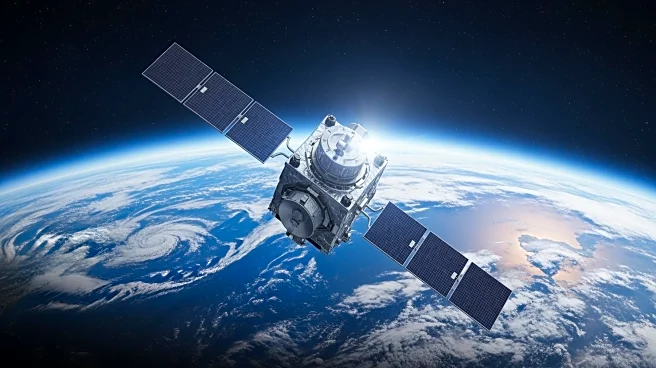
NASA has selected a satellite mission led by the University of California San Diego for the Earth System Explorers (ESE) program. The Earth Dynamics Geodetic Explorer (EDGE) mission, led by Scripps Institution of Oceanography glaciologist Helen Amanda
Fricker, aims to enhance understanding of Earth's systems and improve disaster mitigation capabilities. The mission will utilize laser altimetry to provide high-resolution, three-dimensional observations of terrestrial ecosystems and ice features, with a launch readiness date no earlier than 2030.
Why It's Important?
The EDGE mission represents a significant advancement in Earth observation technology, offering new insights into environmental changes and their impacts. By improving the ability to monitor and predict natural disasters, the mission could contribute to more effective response strategies and policy decisions. The collaboration between NASA and UC San Diego highlights the importance of academic partnerships in advancing scientific research and addressing global challenges.
What's Next?
As the mission progresses, the EDGE team will continue to develop and refine the satellite's technology, preparing for its eventual launch. The data collected by EDGE will be crucial for ongoing research in climate science and environmental monitoring. The mission's success could pave the way for future satellite missions, further expanding the capabilities of Earth observation systems.