
What's Happening?
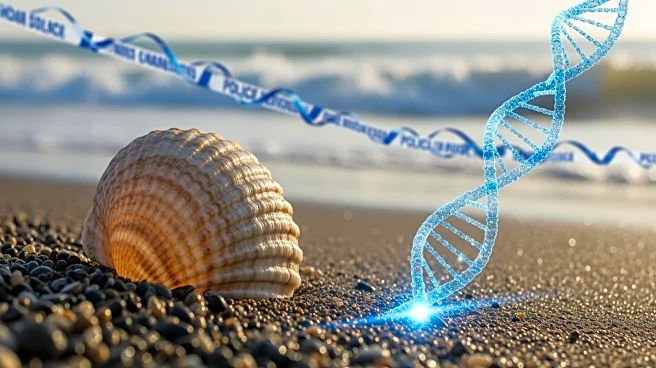
Recent DNA analysis has revealed that the Beachy Head Woman, a Roman-era individual discovered in southern England, was local to the area. Previously thought to have origins in sub-Saharan Africa or the Mediterranean,
the study conducted by scientists at the Natural History Museum and University College London has clarified her ancestry. The research, published in the Journal of Archaeological Science, indicates that she descended from the local British population of Roman-era southern England. Radiocarbon dating places her death between 129 and 311 AD, during the Roman occupation of Britain.
Why It's Important?
This discovery provides significant insights into the population dynamics of Roman-era Britain, challenging previous assumptions about migration and diversity in ancient times. The findings contribute to a more nuanced understanding of historical population movements and interactions in Britain. This research also highlights the advancements in DNA technology, which allow for more accurate reconstructions of historical narratives. The study may influence future archaeological and anthropological research methodologies, encouraging a reevaluation of other historical figures with uncertain origins.