



What's Happening?
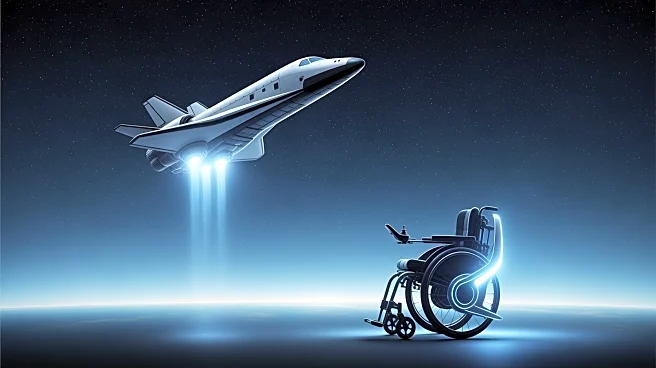
Michaela Benthaus, a 33-year-old engineer, became the first wheelchair user to travel to space on December 20. She was part of a six-passenger crew on a Blue Origin flight, the space company founded by Jeff Bezos. The flight, which launched from West
Texas, lasted 10 minutes and required only minor adjustments to accommodate Benthaus. The New Shepard capsule used for the flight was designed with accessibility in mind. Benthaus is associated with the European Space Agency's graduate trainee program, although the flight was a private mission without ESA's involvement.
Why It's Important?
This milestone represents a significant advancement in making space travel more inclusive. By accommodating a wheelchair user, Blue Origin demonstrates the potential for space tourism to be accessible to a broader range of individuals. This development could inspire other space companies to prioritize accessibility in their designs, potentially opening up new opportunities for people with disabilities. It also highlights the role of private companies in advancing space exploration and tourism, which could have long-term implications for the industry.
What's Next?
The successful flight may encourage further innovations in spacecraft design to accommodate diverse passengers. Blue Origin and other companies might explore additional modifications to enhance accessibility. This could lead to increased interest and investment in space tourism, as well as collaborations with organizations focused on disability rights. The event may also prompt discussions on regulatory standards for accessibility in space travel.