
What's Happening?
The European Union (EU) has intensified its efforts to curb Russian oil revenues by imposing sanctions on traders and operators involved in the Russian oil trade. The EU's Council has added nine 'shadow
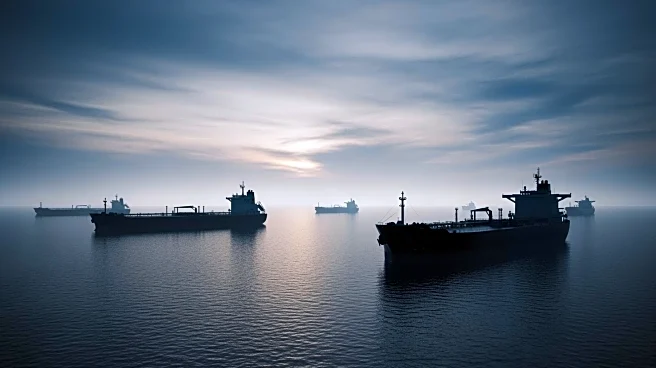
fleet enablers' to its sanctions list, targeting businessmen and entities linked to major Russian state-owned oil companies, Rosneft and Lukoil. These entities, based in the United Arab Emirates, Vietnam, and Russia, are accused of engaging in irregular and high-risk shipping practices to conceal the origin of oil products. Additionally, Ukraine has sanctioned nearly 700 vessels, a significant portion of the shadow fleet transporting Russian oil, as part of a broader campaign to pressure Russia in peace negotiations by cutting oil sector revenues.
Why It's Important?
The sanctions are a strategic move to weaken Russia's economic foundation by targeting its oil revenue, a critical source of funding for its activities. By disrupting the operations of the shadow fleet and associated traders, the EU and Ukraine aim to limit Russia's ability to sustain its geopolitical initiatives. This action could lead to increased tensions in global oil markets, potentially affecting oil prices and supply chains. The sanctions also underscore the EU's commitment to using economic measures as a tool for political leverage, highlighting the interconnectedness of global trade and diplomacy.
What's Next?
The EU is expected to expand its sanctions list, potentially adding at least 40 more tankers. This could lead to further disruptions in the oil supply chain and increased scrutiny of maritime operations. Stakeholders, including shipping companies and oil traders, may need to reassess their strategies to comply with the new regulations. The ongoing sanctions could also prompt Russia to seek alternative markets or methods to circumvent the restrictions, potentially leading to new geopolitical alliances or tensions.
Beyond the Headlines
The sanctions raise ethical and legal questions about the use of economic measures in international diplomacy. They also highlight the challenges of enforcing compliance across diverse jurisdictions and the potential for unintended consequences, such as increased volatility in global oil markets. The situation underscores the complexity of balancing economic interests with political objectives in a globalized world.