



What's Happening?
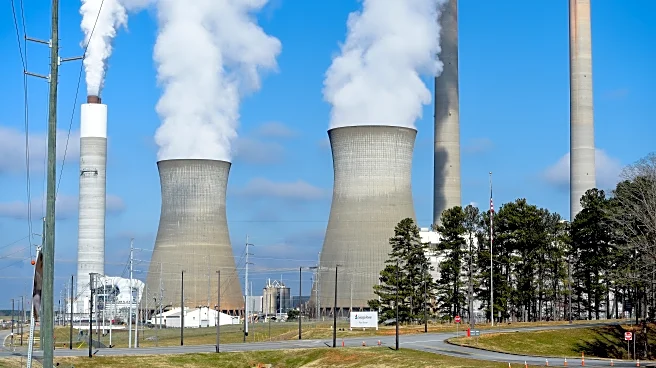
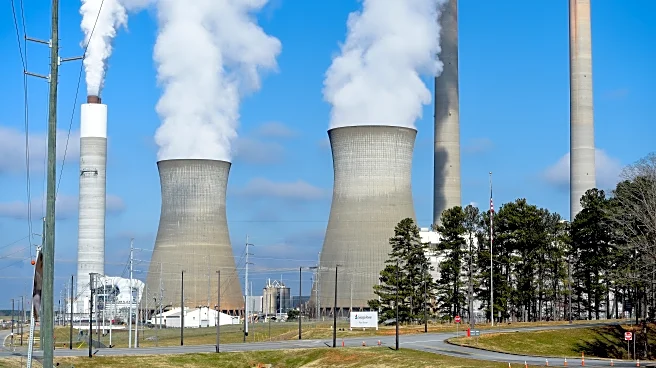
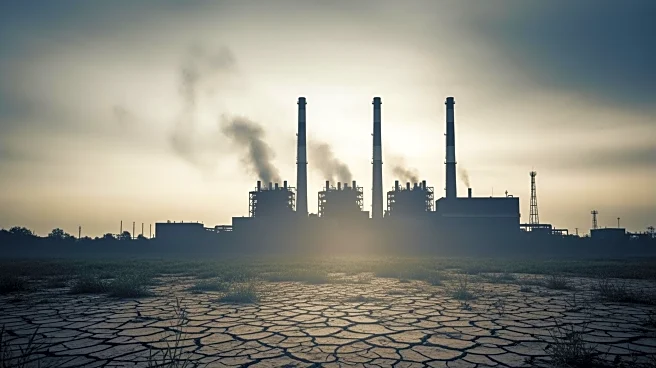
President Trump has proposed a new gas-fired power plant in Ohio, which is expected to become one of the largest sources of carbon dioxide emissions in the U.S. The plant, backed by SoftBank Group Corp., is projected to have a capacity of 9.2 gigawatts
and could emit between 16.2 to 19.4 million metric tons of CO2 annually. This level of emissions is comparable to those from 3.8 million gasoline cars. The project is part of a broader push by President Trump to expand fossil fuel use in the U.S., despite environmental concerns. The plant is intended to meet the growing electricity demands of data centers, as electricity generation in the U.S. has reached its highest level in two decades.
Why It's Important?
The proposed gas plant highlights the ongoing tension between economic development and environmental sustainability. While the plant could provide significant energy capacity to meet rising demands, it also poses a substantial environmental risk due to its high carbon emissions. This development underscores the challenges faced by policymakers in balancing energy needs with climate commitments. The plant's emissions could hinder efforts to reduce the carbon footprint of the U.S. power sector, which is crucial for meeting national and international climate goals. The project also reflects the broader debate over the future of energy production in the U.S., particularly the role of fossil fuels versus renewable energy sources.
What's Next?
The proposal is likely to face scrutiny from environmental groups and policymakers concerned about its environmental impact. There may be calls for stricter regulations or alternative energy solutions to mitigate the plant's carbon emissions. The project could also influence future energy policy decisions, particularly regarding the balance between fossil fuel expansion and renewable energy investment. Stakeholders, including local communities, environmental advocates, and industry leaders, will likely engage in discussions about the plant's potential impacts and the broader implications for U.S. energy policy.