



What's Happening?
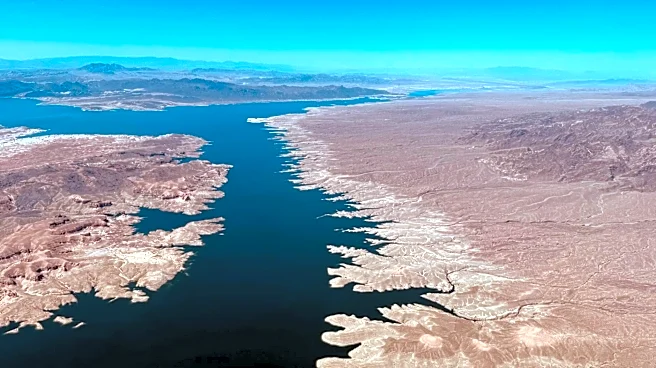
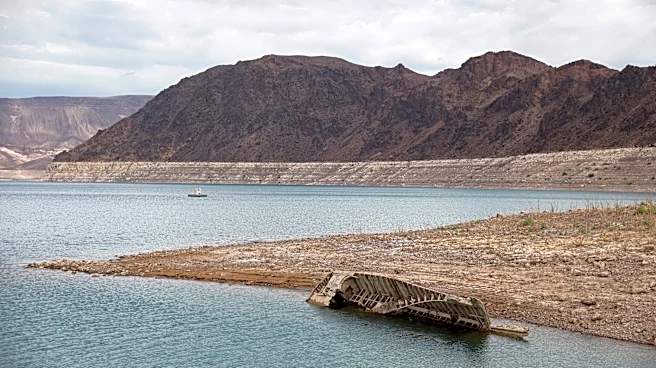
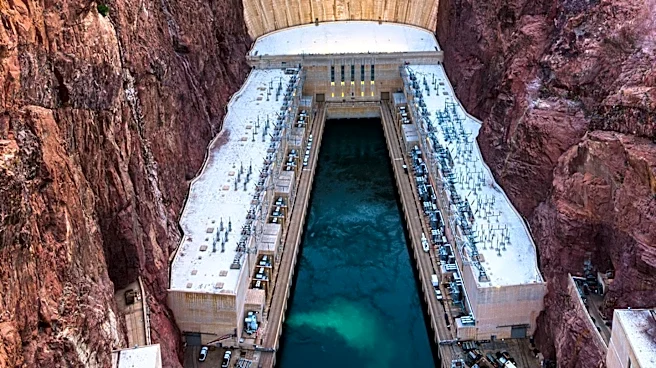
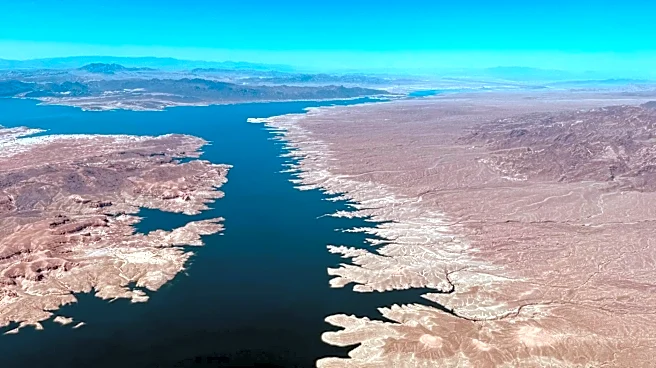
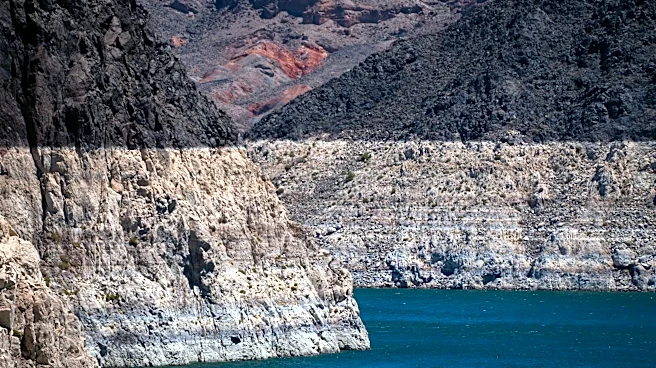
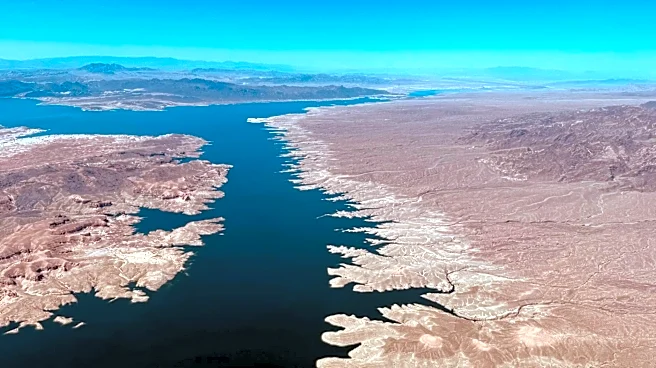
Lake Mead, the largest reservoir in the United States, has reached its lowest water level on record, dropping to 1,040.5 feet. This new low surpasses the previous record set in July 2022. The reservoir, formed by the Hoover Dam on the Colorado River,
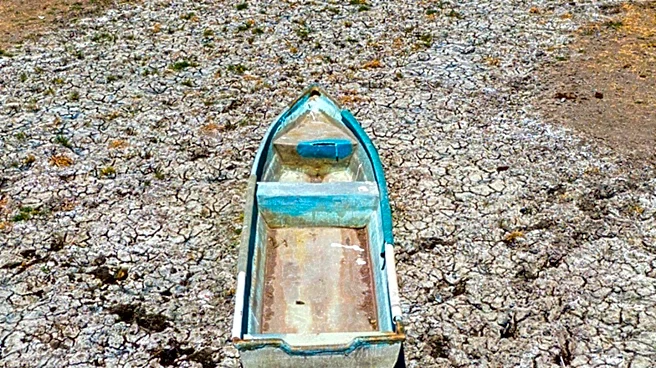
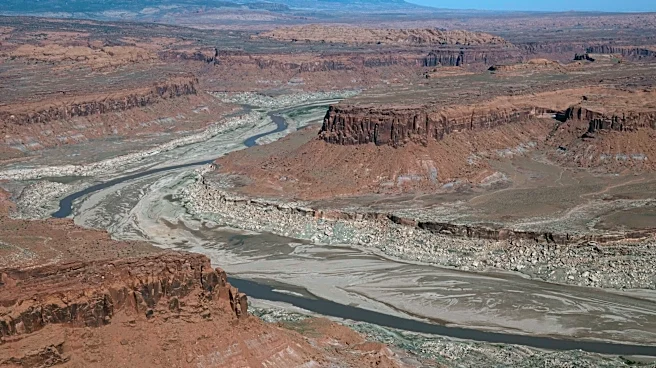
supplies water to over 20 million people across several states. The decline in water levels is attributed to prolonged drought conditions and exceptionally low snowpack, which have affected the Colorado River Basin. The situation is critical as Lake Mead, along with Lake Powell, serves as a vital water source and hydropower provider for the region.
Why It's Important?
The record low water levels at Lake Mead highlight the severe water crisis facing the Colorado River Basin, which is crucial for the water supply and energy needs of millions of residents in the western U.S. The situation underscores the impact of climate change and over-allocation of water resources, prompting concerns about water security and sustainability. The crisis could lead to significant policy changes and water management strategies to address the dwindling water supply. It also raises awareness about the need for conservation efforts and sustainable water usage practices.
What's Next?
As water levels continue to decline, stakeholders, including state governments and federal agencies, may need to implement stricter water usage regulations and explore alternative water sources. The situation could lead to increased negotiations among the seven basin states to address water allocation and conservation measures. Additionally, there may be a push for infrastructure investments to improve water storage and distribution systems. The ongoing crisis could also influence public policy and drive initiatives aimed at mitigating the effects of climate change on water resources.