
What's Happening?
Sindh Chief Minister Syed Murad Ali Shah has emphasized the need to modernize and make the province's irrigation infrastructure resilient to climate challenges. During a meeting with cabinet ministers
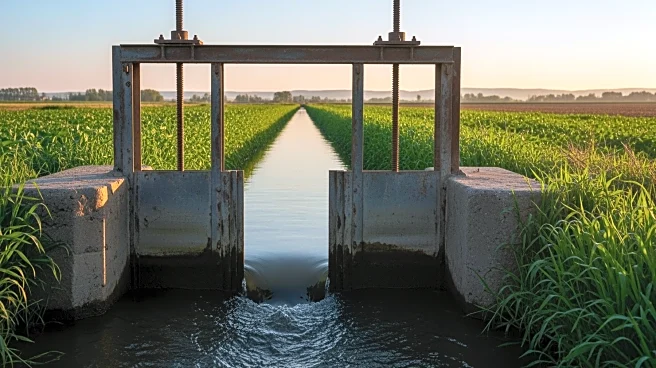
and aides, Shah highlighted the critical role of water management in Sindh's agriculture sector, which is vital for achieving food self-sufficiency and boosting exports. The meeting focused on ongoing irrigation and agriculture projects, including the replacement of 27 gates at the Sukkur Barrage, a key infrastructure for water distribution. The Chief Minister stressed the importance of timely project completion and adherence to quality standards to ensure food security and economic stability. He also reviewed the progress of the KB Feeder project, aimed at increasing Karachi's water supply, and called for accelerated efforts to prevent water shortages during the upcoming crop season.
Why It's Important?
The modernization of Sindh's irrigation infrastructure is crucial for the region's agricultural productivity and economic stability. As climate change poses increasing threats to water resources, ensuring a resilient irrigation system is vital for maintaining food security and supporting the livelihoods of millions of farmers. The successful completion of these projects could lead to enhanced agricultural output, reduced water losses, and improved urban water supply, benefiting both rural and urban populations. The focus on climate resilience also aligns with broader global efforts to adapt to environmental changes, potentially positioning Sindh as a leader in sustainable agricultural practices.
What's Next?
The Sindh government plans to expedite the completion of ongoing projects, with a particular focus on the Sukkur Barrage and KB Feeder. The Chief Minister has directed relevant departments to ensure at least 70% completion of the KB Feeder project during the current canal closure. Additionally, the government will continue to monitor project progress and quality standards closely, with accountability measures in place for any delays or substandard work. These efforts are expected to mitigate water shortages and enhance agricultural productivity in the upcoming crop season.