





What's Happening?
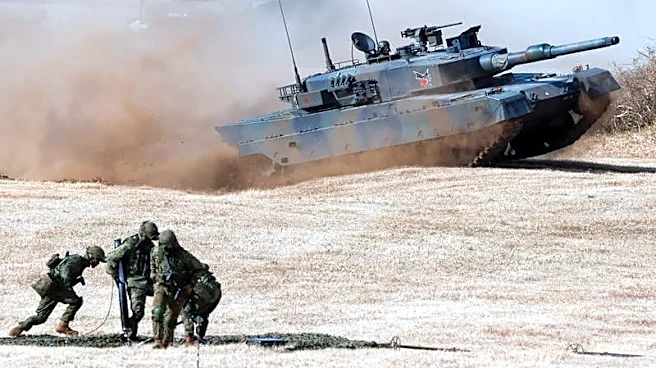
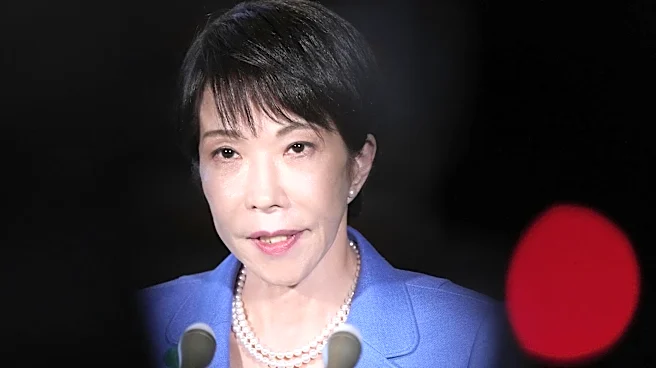
Japan has officially lifted its long-standing ban on the export of lethal weapons, marking a significant shift from its post-World War II pacifist stance. This decision, approved by Prime Minister Sanae Takaichi's Cabinet, aims to bolster Japan's arms
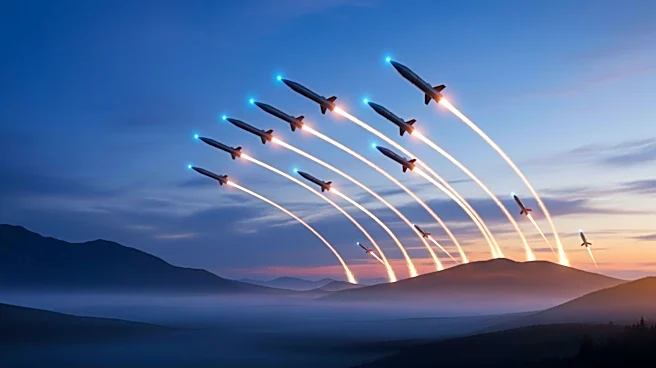
industry and strengthen defense ties with international partners. The new policy allows Japan to export advanced military equipment, including fighter jets, missiles, and destroyers, to 17 countries with which it has defense agreements. This move is part of Japan's broader strategy to enhance its military capabilities in response to regional security challenges. The policy change has been met with criticism from China, while being welcomed by defense partners such as Australia. Japan's Chief Cabinet Secretary Minoru Kihara stated that the policy would contribute to regional peace and stability by creating a favorable security environment for Japan.
Why It's Important?
The lifting of the ban on lethal weapons exports represents a pivotal moment in Japan's defense policy, potentially altering the balance of military power in the Asia-Pacific region. By expanding its arms exports, Japan aims to strengthen its defense industry and reduce reliance on foreign military imports, particularly from the United States. This policy shift could lead to increased economic opportunities for Japanese defense contractors and foster closer military cooperation with allies. However, it also raises concerns about escalating regional tensions and the potential for an arms race. Critics argue that this move could undermine Japan's pacifist constitution and increase the risk of military conflicts. The decision reflects Japan's strategic response to perceived threats from neighboring countries, including China and North Korea, and aligns with its efforts to play a more proactive role in regional security.
What's Next?
Japan's new policy on arms exports is expected to lead to increased collaboration with international defense partners and potentially boost its defense industry. The government will monitor the management of exported weapons to ensure compliance with international standards. Japan's defense industry is likely to see growth, with major companies and startups showing interest in dual-use goods and drone technology. The policy change may also prompt other countries in the region to reassess their defense strategies and military alliances. As Japan continues to expand its military capabilities, it may face diplomatic challenges in balancing its defense ambitions with its commitment to regional peace and stability.