





What's Happening?
A community-safety meeting was held at Village Green West Seattle to address ongoing concerns regarding Roxhill Park, particularly following a recent shooting. The meeting, organized by Village Green and Southwest Precinct crime-prevention coordinator
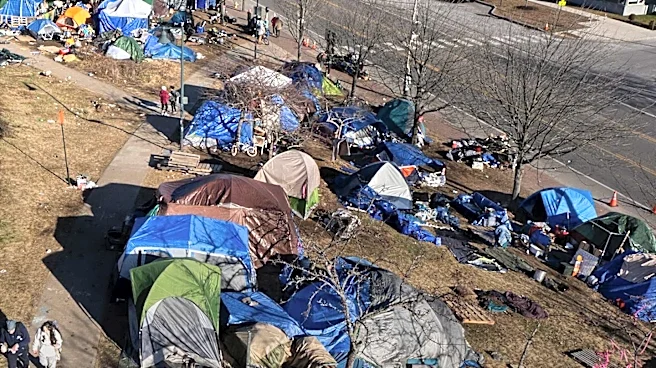
Jennifer Satterwhite, brought together representatives from various agencies including the Unified Care Team (UCT), Seattle Police, Seattle Fire, King County Sheriff’s Office, and Seattle Parks and Recreation. Residents voiced frustrations about crime, encampments, and perceived lack of enforcement, with some highlighting issues like harassment, theft, and illegal fires. The UCT representatives explained their focus on harm reduction strategies, service provision, and cleanup, emphasizing that their goal is to resolve locations and ensure safety and accessibility. They also noted the legal rules and outreach required before clearances. Parks representatives stated that patrols at Roxhill Park have been increased and two full-time maintenance personnel are assigned daily to the park. Community members expressed a desire for more direct engagement from policymakers, as no elected officials were present, though a representative from City Councilmember Rob Saka’s office was in attendance.
Why It's Important?
This meeting underscores the complex challenges faced by urban communities in balancing public safety, environmental concerns, and humanitarian approaches to homelessness. The community's frustration highlights a perceived gap between policy and enforcement, with residents feeling that existing rules are not adequately applied to address issues like encampments, crime, and public nuisances. The involvement of multiple city and county agencies, including law enforcement, fire services, and social support teams, illustrates the multi-faceted nature of these problems. The discussion about 'harm reduction strategies' and the need for 'multi-level collaboration' reflects a broader societal debate on how to manage public spaces and support vulnerable populations while ensuring the safety and well-being of all residents. The concerns raised by residents, such as the impact on property values and personal safety, indicate a significant strain on community cohesion and trust in local governance. The call for policymakers to engage directly suggests a demand for more decisive and effective solutions that address both the immediate symptoms and underlying causes of these urban challenges.
What's Next?
In the immediate future, increased patrols by Park Rangers at Roxhill Park are expected to continue for several weeks. The Parks department is also working to 'open up' sightlines along trails, though ecological considerations limit vegetation removal in some areas. The Unified Care Team will continue its efforts to resolve locations through harm reduction strategies, service provision, and cleanup, with a focus on preventing sites from returning to previous conditions. Law enforcement agencies, including the Seattle Police Department and King County Sheriff’s Office, will continue to respond to criminal activity, with residents urged to report incidents to 911 or the non-emergency line. Captain Krista Bair of the Southwest Precinct indicated that efforts are underway to address theft in areas like Westwood Village and expressed hope that new tiny-home villages in West Seattle and South Park will help reduce homelessness. The community's call for direct engagement from policymakers suggests that further discussions and potential policy adjustments may be sought to address the systemic issues raised during the meeting.
Beyond the Headlines
The Roxhill Park community meeting reveals deeper societal tensions surrounding urban development, public safety, and social welfare. The sentiment expressed by some residents that 'they have more rights than we do' points to a perceived imbalance in how different groups are treated under existing policies, particularly concerning individuals experiencing homelessness. This highlights a broader ethical dilemma for cities: how to uphold the rights and dignity of all individuals, including those without stable housing, while simultaneously ensuring public safety and maintaining community standards. The discussion also touches upon the limitations of enforcement-only approaches to complex social issues like homelessness, as articulated by Captain Bair's statement, 'We can’t enforce our way out of homelessness.' This suggests a need for comprehensive, long-term strategies that integrate social services, housing solutions, and community engagement, rather than relying solely on law enforcement. The ongoing challenges at Roxhill Park could serve as a microcosm for similar issues in other U.S. cities, prompting a re-evaluation of urban planning, resource allocation, and community-led initiatives to foster inclusive and safe public spaces.