




What's Happening?
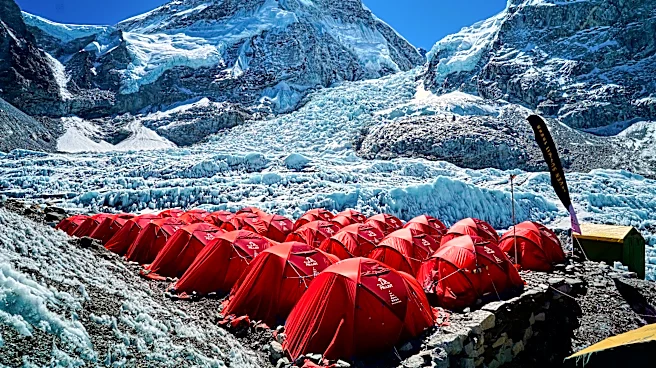
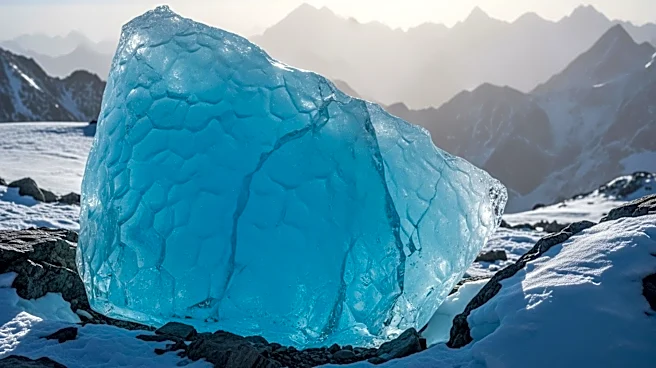
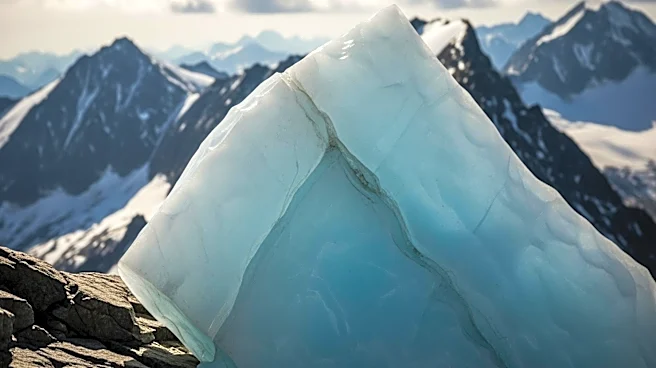
The climbing season on Mount Everest has commenced later than usual due to a massive and unstable ice block, known as a serac, which has been hanging dangerously over the key trail. Despite high travel costs and increased permit fees, hundreds of climbers
are preparing to ascend the world's highest peak. The serac, part of the Khumbu Icefall, has stalled climbers for over two weeks, prompting warnings from the Sagarmatha Pollution Control Committee about its potential collapse. Climbers are advised to exercise extreme caution as they navigate the treacherous route.
Why It's Important?
The situation on Mount Everest highlights the ongoing challenges faced by climbers due to climate change and global warming, which are causing glaciers to melt faster. The presence of the unstable serac poses significant risks, emphasizing the need for careful planning and risk assessment by climbers and expedition operators. The increased costs and dangers may impact the number of climbers attempting the ascent, affecting local economies reliant on tourism. The event underscores the broader implications of environmental changes on adventure tourism and the safety of climbers.
What's Next?
Climbers and guides are closely monitoring the situation, with some opting to reduce loads and minimize exposure time in the Icefall. The climbing community is expected to continue assessing the risks and adapting strategies to ensure safety. The ongoing melting of glaciers due to climate change may lead to more frequent occurrences of such hazards, necessitating further adjustments in climbing practices and safety protocols.
Beyond the Headlines
The challenges faced by climbers on Mount Everest reflect broader environmental issues, including the impact of climate change on natural landscapes. The melting glaciers not only pose risks to climbers but also threaten the ecological balance in the region. The situation calls for increased awareness and action to address climate change and its effects on vulnerable areas like the Himalayas.