






What's Happening?
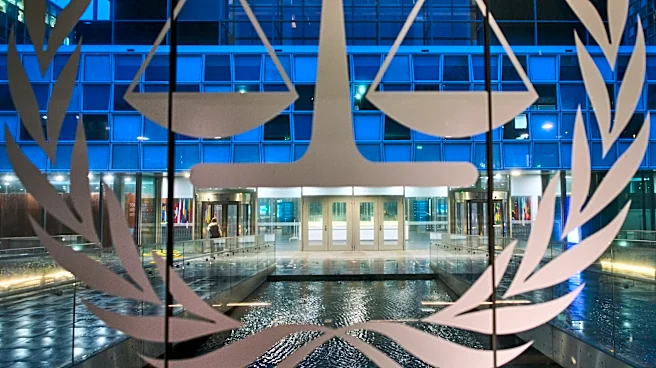
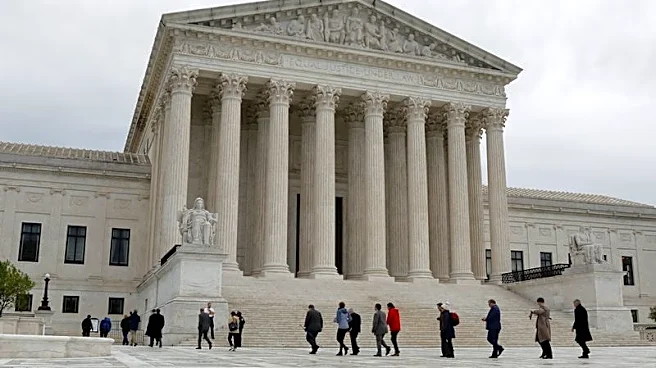
A federal court in Maine has rejected the Trump administration's attempt to dismiss central claims in a lawsuit challenging President Trump's sanctions against the International Criminal Court (ICC). The lawsuit, brought by Fortify Rights founder and
CEO Matthew Smith and international human rights lawyer Akila Radhakrishnan, contests Executive Order 14203, issued on February 6, 2025. This order threatens penalties for communications with the ICC’s Office of the Prosecutor, including sharing evidence, expert analysis, and legal advice. The plaintiffs argue that these restrictions violate their First Amendment rights under the U.S. Constitution and exceed federal law authority. The court's September 28 ruling allows the challenge to move forward, finding a strong likelihood that the executive order infringed upon the plaintiffs’ First Amendment rights. The administration's arguments regarding lack of standing and premature claims were also rejected.
Why It's Important?
This ruling is significant as it allows a direct legal challenge to the U.S. government's ability to restrict its citizens' engagement with international judicial bodies. The potential for penalties on individuals for communicating with the ICC's Office of the Prosecutor could have a chilling effect on human rights advocacy and international legal cooperation. Organizations and individuals involved in documenting and addressing human rights abuses, such as those highlighted by Matthew Smith concerning Myanmar, rely on the ability to share information and expertise with international courts. If the sanctions were upheld, it could impede efforts to achieve accountability for severe international crimes, potentially undermining the broader framework of international justice and human rights. The case also tests the boundaries of executive power and First Amendment protections in the context of foreign policy and international relations.
What's Next?
The lawsuit will now proceed, with the plaintiffs continuing their challenge against Executive Order 14203. A preliminary injunction from July 2025 remains in effect, prohibiting the administration from punishing Smith and Radhakrishnan for their communications with the ICC while the case is ongoing. The American Civil Liberties Union (ACLU) and ACLU of Maine, representing the plaintiffs, have expressed their intent to continue vindicating their clients' rights in court. The outcome of this legal battle could set a precedent for how the U.S. government interacts with international judicial institutions and the extent to which it can restrict its citizens' involvement in such engagements. Further legal proceedings will determine the ultimate legality of the sanctions and their implications for human rights advocates and international law.
Beyond the Headlines
The legal challenge against President Trump's ICC sanctions delves into fundamental questions about freedom of speech and the role of the U.S. in international justice. The First Amendment implications are profound, as the executive order attempts to regulate communications between U.S. citizens and an international body, potentially limiting the free exchange of information and legal expertise. This case highlights the tension between national sovereignty and the pursuit of universal human rights, particularly when U.S. policy diverges from international legal norms. The broader implications extend to the credibility and effectiveness of international institutions like the ICC, which rely on cooperation and information sharing to fulfill their mandate. A successful challenge could reinforce the importance of civil liberties in foreign policy and underscore the U.S. commitment to human rights, even when it involves scrutiny of international actors.