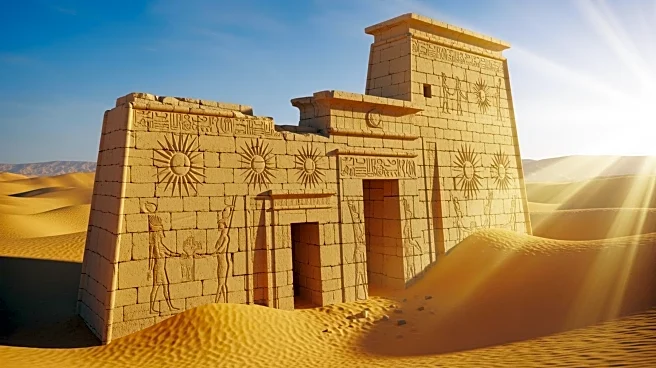




What's Happening?
A significant archaeological discovery has been made in Egypt, where a massive lost temple has been uncovered, shedding light on the ancient sun cult practices. Led by experts from the Universities of Turin and Naples, the excavation has revealed more
than half of the monumental structure, providing insights into the cultural and everyday life of ancient Egyptians. The temple, known as the Valley Temple of King Nyuserre, spans over 1,000 square meters and is one of the largest discovered in Egypt's Memphis necropolis. Despite being identified in 1901, the site remained inaccessible due to high groundwater levels until now. The excavation has uncovered architectural features such as the temple's entrance, limestone column bases, and granite columns, along with artifacts like wooden pieces from the ancient game Senet and a stone lintel inscribed with hieroglyphs. These findings offer a glimpse into the grandeur of royal Egyptian architecture and the everyday lives of the people who lived in its shadow.
Why It's Important?
The discovery of the Valley Temple of King Nyuserre is a major contribution to Egyptology, providing a rare look into ancient Egyptian religious practices and architectural grandeur. The temple's excavation offers valuable insights into the role of sun temples in Egyptian culture, highlighting the significance of solar worship in ancient religious practices. Additionally, the artifacts found at the site, such as the game pieces and hieroglyphs, provide a deeper understanding of the leisure activities and cultural life of ancient Egyptians. This discovery not only enriches historical knowledge but also enhances the understanding of how ancient societies adapted to changes in political and social structures. The continued excavation promises to reveal more about the origins and evolution of Egypt's sun temples, contributing to the broader field of archaeology and history.