




What's Happening?
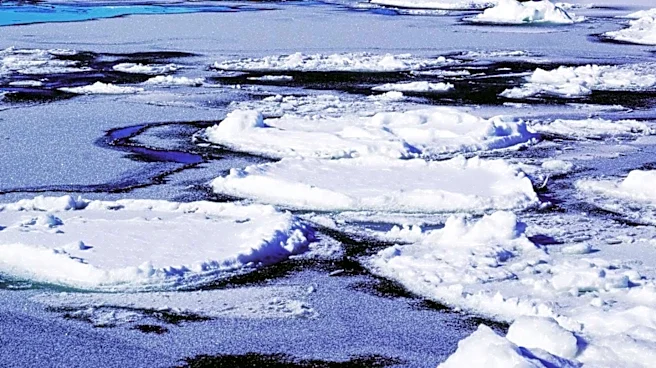
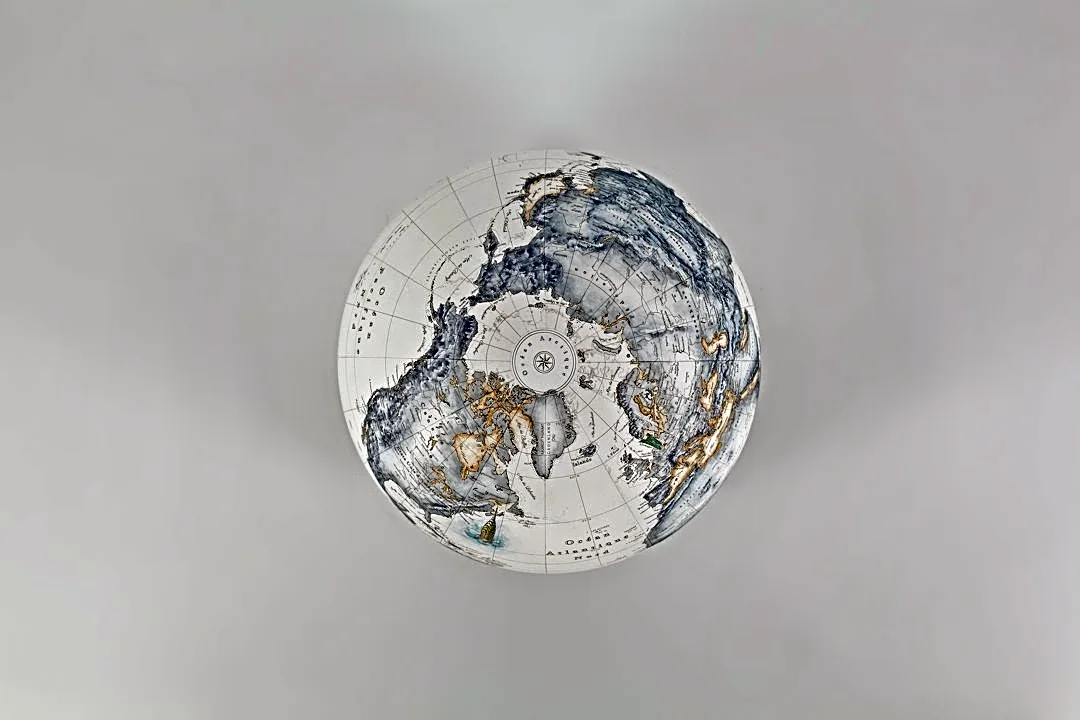
New research, published in Nature Geoscience, indicates that the Arctic could lose approximately one million square kilometers more winter sea ice than earlier scientific predictions. This revised estimate is based on an improved modeling approach that incorporates
evidence from a warmer Arctic period 6,000 years ago. Scientists from the University of Cambridge and Mexico's Centro de Investigación en Matematicas (CIMAT) utilized a chemical marker from algae found in sea ice, preserved in ocean sediment cores, to reconstruct past ice conditions. By comparing these historical reconstructions with simulations from 27 climate models, they identified a significant positive bias in the models, which collectively predicted more winter sea ice than the ancient evidence supported. Applying a statistical method called Bayesian weighting, they assigned greater importance to models that more accurately reflected historical data, leading to more reliable future projections. This refined methodology reduced the uncertainty in some projections by as much as 85%.
Why It's Important?
The more accurate prediction of Arctic winter sea ice loss is crucial because winter ice plays a significant role in global weather patterns. It regulates the exchange of heat and moisture between the ocean and the atmosphere, influencing weather far beyond the Arctic region. A decline in winter sea ice has been linked to colder winters and increased snowfall in areas such as the United Kingdom, northern Europe, and North America. Therefore, a greater loss of winter sea ice could intensify these weather phenomena, leading to more extreme winter conditions in various parts of the Northern Hemisphere. Furthermore, the improved model weighting also suggests that current climate models may underestimate future snowfall in southeastern Greenland and rainfall in the Mediterranean region. Increased snowfall in Greenland could impact the stability of its ice sheet, while higher rainfall in the Mediterranean could elevate flooding risks in southern Europe. These potential widespread effects underscore the interconnectedness of global climate systems and the far-reaching consequences of Arctic warming.
What's Next?
The refined climate models provide a clearer foundation for further investigation into the risks associated with changing Arctic conditions. Researchers will likely use these updated projections to conduct more precise studies on the potential impacts on global weather, ocean currents, and ecosystems. The findings will also inform policy discussions and adaptation strategies in regions that could experience more extreme winter weather or increased precipitation. The scientific community will continue to explore how these changes might affect the Greenland ice sheet's stability and the implications for sea-level rise. Additionally, the methodology of using ancient climate records to refine modern models could be applied to other climate phenomena, potentially improving the accuracy of various climate predictions. This research emphasizes the ongoing need for robust climate modeling and the integration of historical data to enhance our understanding of future climate scenarios.
Beyond the Headlines
The study's reliance on paleoclimate records highlights the critical role of historical geological and biological data in understanding contemporary climate change. By looking back 6,000 years, scientists can validate and improve the predictive power of modern climate models, demonstrating that past environmental conditions offer invaluable insights into future trends. This interdisciplinary approach, combining geology, biology, and climate science, underscores the complexity of Earth's systems and the necessity of holistic research. The fact that the warming during the mid-Holocene was naturally driven, yet its effects on sea ice are physically analogous to human-induced warming, reinforces the fundamental principles of climate science: warming, regardless of its cause, leads to sea ice melt. This perspective can help bridge the gap between historical climate variability and current anthropogenic climate change, providing a more unified understanding of Earth's climate sensitivity. The ethical implication is that while the past offers lessons, the current rate and scale of change demand urgent action, as the consequences of a rapidly warming Arctic are becoming increasingly evident and potentially more severe than previously thought.