








What's Happening?
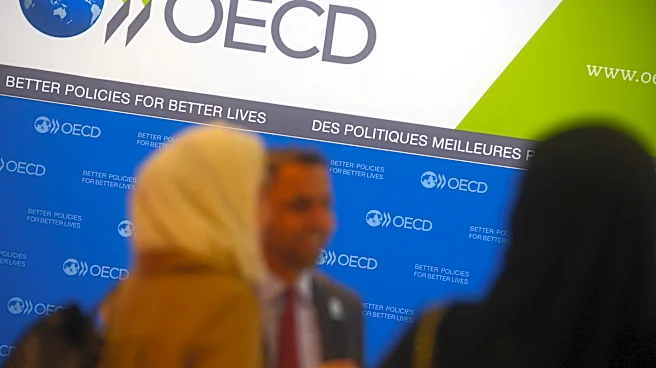
The Organisation for Economic Co-operation and Development (OECD) is an international body dedicated to fostering better policies for improved lives. Comprising 38 democratic nations, including the United States, the OECD serves as a unique platform for governments
to collaborate on economic, social, and environmental challenges stemming from globalization. Its primary function involves comparing policy experiences, identifying effective practices, and coordinating domestic and international policies among its member states. The organization leverages 60 years of experience to provide evidence-based international standards and solutions across various domains. This includes efforts to enhance economic performance, create employment opportunities, strengthen education systems, and combat international tax evasion. The OECD also acts as a knowledge hub, offering data, analysis, and advice on public policies and international standard-setting.
Why It's Important?
The OECD's work is crucial for the United States and other member nations as it facilitates a coordinated approach to complex global issues. By providing a forum for policy comparison and best practice sharing, the organization helps member countries, including the U.S., to refine their own policies, potentially leading to more effective governance and improved societal outcomes. Its focus on economic performance and job creation directly impacts the prosperity of American citizens and businesses. Furthermore, the OECD's initiatives against international tax evasion are vital for ensuring fair tax systems and preventing revenue loss that could otherwise fund public services in the U.S. The collaborative environment fostered by the OECD allows the U.S. to engage with other leading democracies, influencing and being influenced by global policy trends, which can have significant long-term implications for its economic stability and social welfare.
What's Next?
The OECD will continue its mission of shaping policies that promote prosperity, equality, opportunity, and well-being. This involves ongoing engagement with governments, policymakers, and citizens to establish and refine evidence-based international standards. The organization is expected to persist in its role as a hub for discussing global policy issues, interacting with various stakeholders such as international organizations, parliamentarians, the business sector, trade unions, academics, and NGOs. Through these interactions, the OECD aims to further build its network of knowledge and promote multilateral cooperation. Its continuous provision of high-quality policy advice, drawing on multidisciplinary perspectives and peer-learning approaches, will remain central to its efforts in defining best practices across economic and social policy fields.
Beyond the Headlines
Beyond its immediate policy recommendations, the OECD's existence underscores a deeper commitment among leading democracies to address shared global challenges through cooperation rather than isolation. The organization's emphasis on evidence-based policy-making promotes a more rational and data-driven approach to governance, potentially influencing how individual nations, including the U.S., develop their own domestic policies. The OECD's role in setting international standards also highlights the increasing interconnectedness of the global economy and the necessity for harmonized approaches to issues like taxation and trade. This collaborative framework can foster greater trust and stability in international relations, indirectly benefiting U.S. foreign policy objectives and economic interests by creating a more predictable and equitable global environment for trade and investment.