
What's Happening?
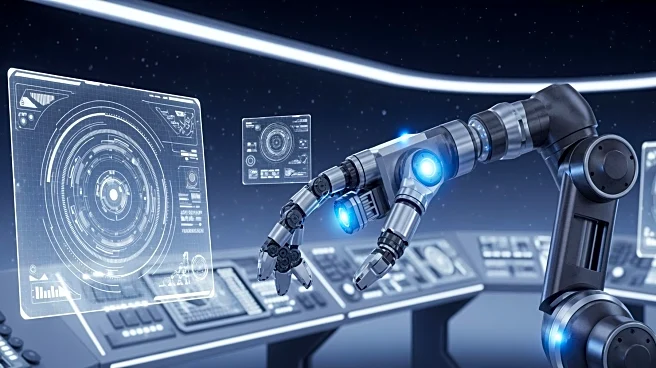
The Expedition 74 crew aboard the International Space Station is focusing on robotics and virtual reality to enhance space technology. NASA's Chris Williams is preparing for a robotics challenge involving
Astrobee robotic helpers, which assist in daily tasks and promote STEM education. Meanwhile, Roscosmos cosmonauts are using virtual reality to study balance and spatial orientation in microgravity. These activities are part of broader efforts to improve human research and operational efficiency in space. The crew is also conducting safety inspections and Earth observations, contributing to ongoing scientific and educational missions.
Why It's Important?
The use of robotics and virtual reality on the International Space Station represents significant advancements in space technology. These tools not only improve operational efficiency but also enhance educational outreach by engaging students in STEM fields. The research conducted in microgravity conditions provides valuable insights into human adaptation to space, which is crucial for future long-term missions. By integrating these technologies, NASA and its partners are paving the way for more sustainable and effective space exploration, which has implications for scientific discovery and international collaboration.
What's Next?
The upcoming robotics challenge will see students' codes controlling Astrobee robots, fostering international collaboration and education in STEM. The results from the virtual reality studies will contribute to understanding human adaptation to space, potentially influencing future mission planning. Continued advancements in these areas are expected to enhance the capabilities of the International Space Station and support future exploration missions, including those to the Moon and Mars.