





What's Happening?
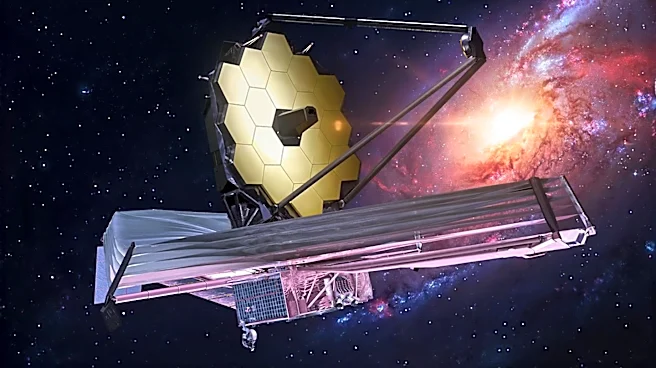
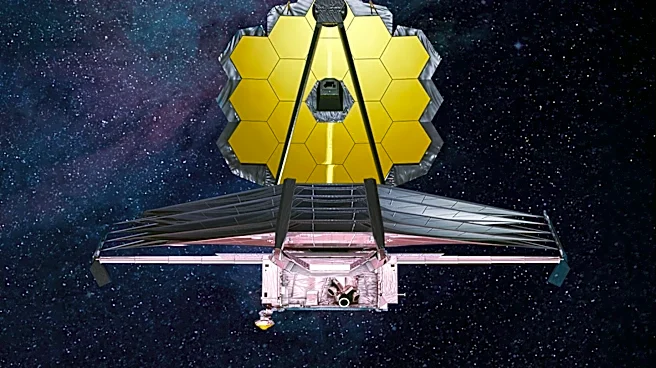
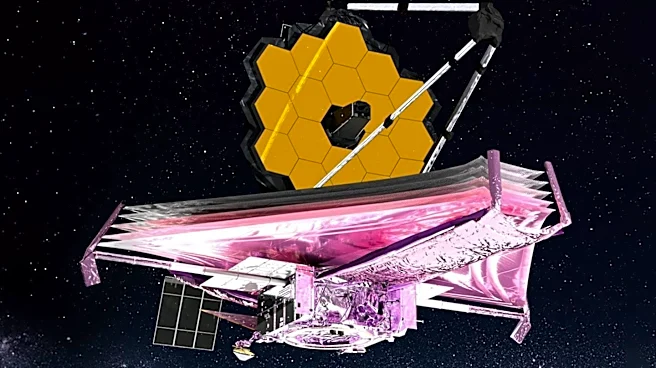
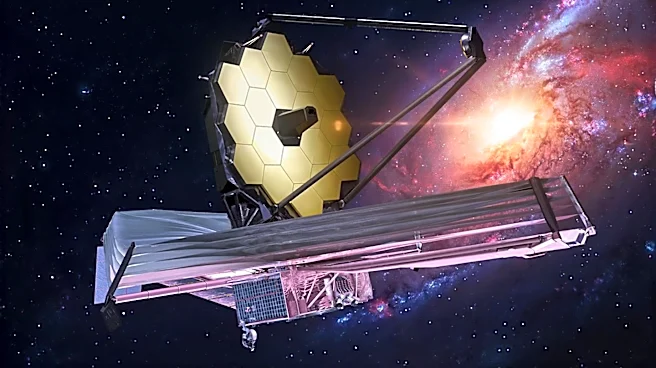
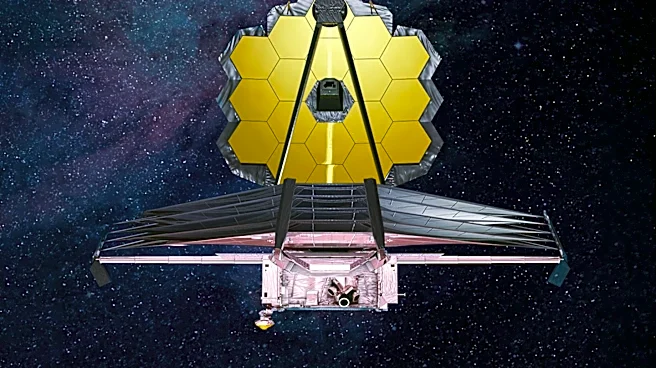
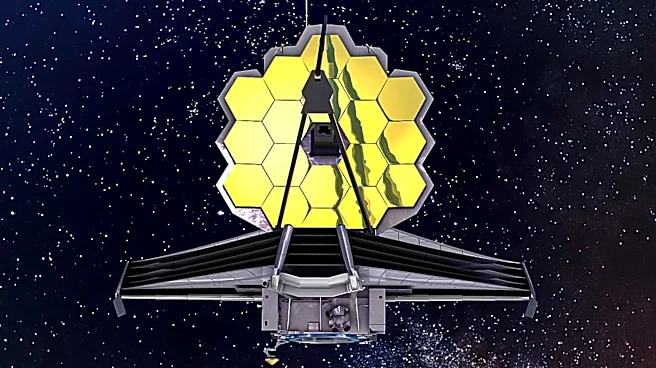
Astronomers have identified a new gravitational arc candidate in the galaxy cluster MACS J0308.9+2645 using data from the James Webb Space Telescope (JWST). The discovery was made by astrophysicist Homer Dávila Gutierrez, who found the arc, designated
A1, while analyzing JWST's Near-Infrared Camera data. The arc is believed to be a galaxy from the early universe, approximately 9 billion years old, and was identified through gravitational lensing, a phenomenon where massive objects bend light from more distant sources.
Why It's Important?
This discovery highlights the capabilities of the JWST in exploring the early universe and identifying previously unseen cosmic structures. The identification of such objects can provide valuable insights into the formation and evolution of galaxies, enhancing our understanding of the universe's history. The use of gravitational lensing as a tool for discovery underscores the potential for further breakthroughs in astrophysics, as more data from the JWST becomes available.
What's Next?
Further analysis and follow-up observations are needed to confirm the nature and characteristics of the newly discovered arc. The ongoing study of such objects will continue to expand our knowledge of the early universe, with the JWST playing a crucial role in future discoveries. Collaboration among astronomers and the use of advanced technologies will be essential in unlocking the mysteries of the cosmos.