

What's Happening?
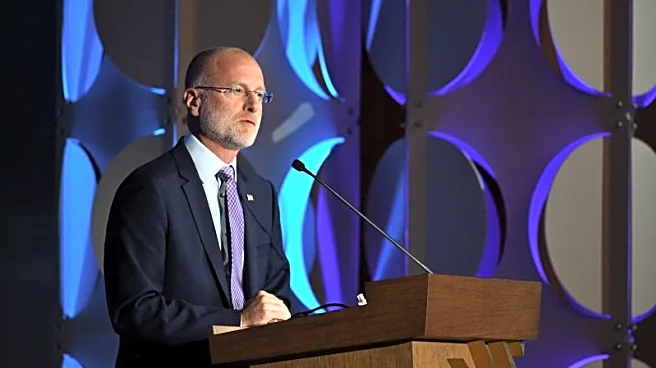
FCC Chairman Brendan Carr has reiterated President Trump's criticism of media coverage regarding the Iran war, warning broadcasters that they must 'correct course' or risk losing their licenses. Carr's comments, made on social media, align with Trump's accusations
that media outlets are intentionally misleading the public about the status of U.S. tanker planes in Saudi Arabia. Carr emphasized that broadcasters must operate in the public interest, and failure to do so could result in license revocation. This stance has sparked debate over the role of the FCC in regulating broadcast content and the potential impact on press freedom.
Why It's Important?
Carr's warning to broadcasters highlights the ongoing conflict between the Trump administration and the media, raising concerns about government overreach and censorship. The FCC's threat to revoke licenses could lead to self-censorship among broadcasters, impacting the diversity of viewpoints presented to the public. This situation underscores the importance of maintaining a free and independent press, particularly in times of international conflict. The controversy also reflects broader societal debates about the role of media in shaping public perception and the boundaries of government intervention.
What's Next?
The FCC's actions may prompt legal challenges from media organizations and advocacy groups, seeking to protect press freedoms and challenge the agency's authority. Broadcasters may also seek clarification on the implications of Carr's comments for their operations and license renewals. Political leaders and civil society groups are likely to engage in discussions about the balance between national security interests and the protection of free speech.
Beyond the Headlines
Carr's comments reflect broader concerns about the erosion of trust in media institutions and the impact of political rhetoric on public perception. The situation may influence how media organizations approach coverage of sensitive topics, potentially leading to changes in editorial practices. The controversy also highlights the importance of safeguarding democratic principles, including the right to free expression and access to diverse information sources.