







What's Happening?
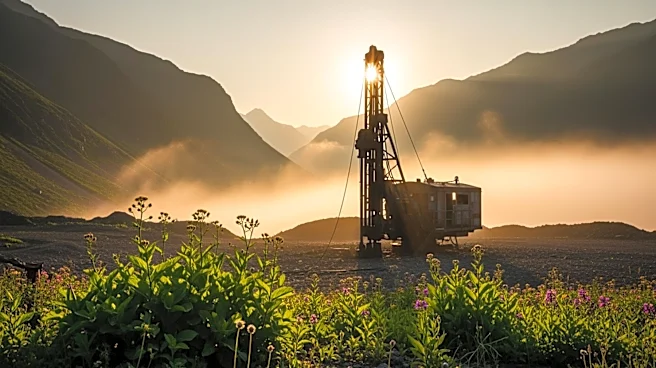
A mining company based in Rapid City, South Dakota, Pete Lien & Sons, has decided to cancel its plans to drill for graphite in the Black Hills. This decision follows significant opposition from Native American tribes and a temporary restraining order
that halted the project. The company communicated its withdrawal to the United States Forest Service, stating it would not pursue another plan for this project. The opposition stemmed from the project's proximity to Pe'Sla, a sacred site for Sioux tribes, used for ceremonies and buffalo grazing. Nine tribes from South Dakota, North Dakota, and Nebraska filed a lawsuit against the Forest Service, citing violations of the National Historical Preservation Act and the National Environmental Protection Act, as the project was approved without an environmental review. The NDN Collective and other environmental groups also challenged the project, leading to a temporary restraining order against the drilling.
Why It's Important?
The cancellation of the graphite drilling project in the Black Hills is significant as it underscores the ongoing tensions between industrial interests and Native American tribes over land rights and environmental preservation. The Black Hills are considered unceded territory by the Sioux tribes, who have historically resisted industrial encroachments. This development highlights the power of tribal advocacy and legal action in protecting sacred lands. It also raises broader questions about the balance between economic development and the preservation of cultural and environmental heritage. The decision may set a precedent for future disputes involving indigenous land rights and resource extraction in the U.S.
What's Next?
While Pete Lien & Sons has withdrawn its current plan, the broader issue of land rights in the Black Hills remains unresolved. The Sioux tribes continue to assert their claim to the land, as established by the 1868 Treaty of Fort Laramie, despite the U.S. government's historical seizure of the area. Future legal and political battles may arise as tribes seek to protect their lands from similar projects. Additionally, this case may influence how federal agencies approach environmental reviews and tribal consultations in future resource extraction projects.