







What's Happening?
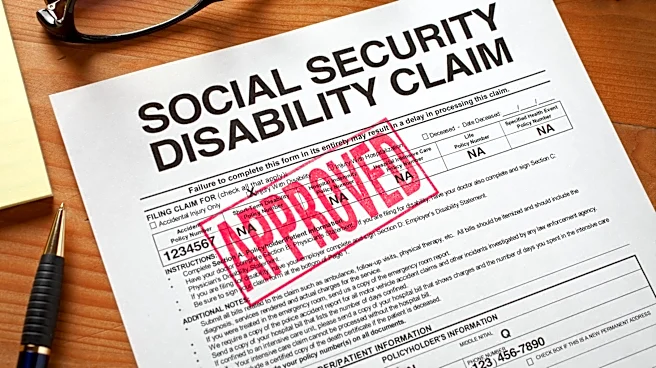
The Social Security Administration (SSA) has reached 105 million 'my Social Security' accounts, making it a significant test case for digital identity verification at scale within the federal government. Access to SSA's online services now requires users
to sign in through Login.gov or ID.me, replacing the agency's old username and password system. While Login.gov is designated as the universal sign-on for covered public services by an Office of Management and Budget (OMB) memorandum, agencies can offer alternative solutions if Login.gov cannot meet specific user needs or imposes undue burdens. The SSA's strategic plan aims for 110 million accounts by the end of fiscal year 2027, with an earlier, more ambitious goal of 200 million by the end of calendar year 2026 still being pursued. Identity proofing for these services can involve biometrics, such as selfies and facial matching, particularly with ID.me and Login.gov's enhanced IAL2 service. However, reports indicate that some users, including those without current photo identification, unhoused individuals, or those whose identities cannot be established through data matching, face significant barriers.
Why It's Important?
This initiative represents a critical juncture for the federal government's push towards digital-first public services. The success or failure of the SSA's digital identity verification system will heavily influence future government-wide strategies for online access. While aiming to enhance security and efficiency, the current implementation highlights a significant challenge: ensuring equitable access for all citizens. The reported difficulties faced by vulnerable populations underscore the potential for digital identity requirements to create new forms of exclusion. If not addressed, these barriers could prevent millions of Americans from accessing essential government benefits and services, exacerbating existing social inequalities. The OMB's directive for agencies to monitor verification pass rates, abandonment rates, and completion times, alongside fraud and security metrics, indicates an awareness of these issues, but effective solutions are yet to be fully realized. The outcome will shape public trust in digital government and the future of identity verification policies.
What's Next?
The OMB's directive requires agencies to continuously monitor user burden and access limitations, suggesting that adjustments to the digital identity verification process are likely. Agencies must balance security needs with user accessibility, potentially leading to the development of more inclusive verification methods or expanded support services for those facing difficulties. The SSA will need to refine its approach to attract the remaining tens of millions of Americans who have not yet created accounts, addressing both the perceived lack of immediate need and the practical challenges of identity proofing. This may involve increased outreach, simplified verification options, or enhanced in-person support at locations like U.S. Postal Service offices. Furthermore, the broader government will observe the SSA's experience to inform the rollout of Login.gov across other federal services, with a focus on minimizing friction and ensuring that digital gateways do not become obstacles for legitimate users.
Beyond the Headlines
The SSA's digital identity initiative touches upon fundamental questions of digital inclusion and civic participation in an increasingly online world. The reliance on digital identity proofing, especially biometrics, raises concerns about privacy, data security, and the potential for algorithmic bias. For individuals who lack traditional forms of identification or digital literacy, the shift to online-only access can effectively disenfranchise them from critical government services. This situation highlights the ethical imperative for government agencies to design digital systems that are not only secure and efficient but also universally accessible and equitable. The long-term implications include a potential widening of the digital divide if robust, inclusive solutions are not implemented, and a re-evaluation of what constitutes 'identity' in the digital age, particularly for marginalized communities. The ongoing debate will likely influence future legislation and policy around digital rights and access to public services.