







What's Happening?
India's National Investigation Agency (NIA) is investigating a suspected international drone network after alleging that six Ukrainian nationals and an American citizen, currently in Indian custody, are linked to a drone attack on a civilian passenger
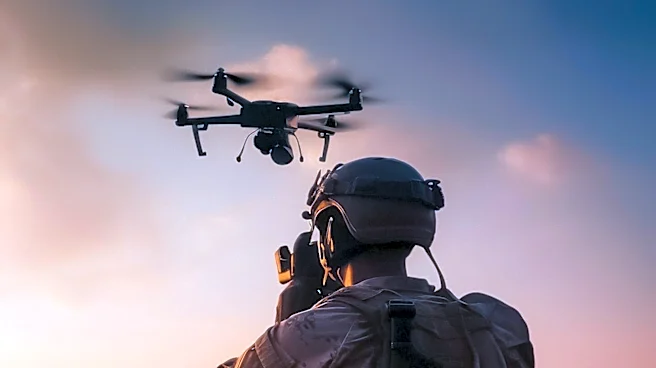
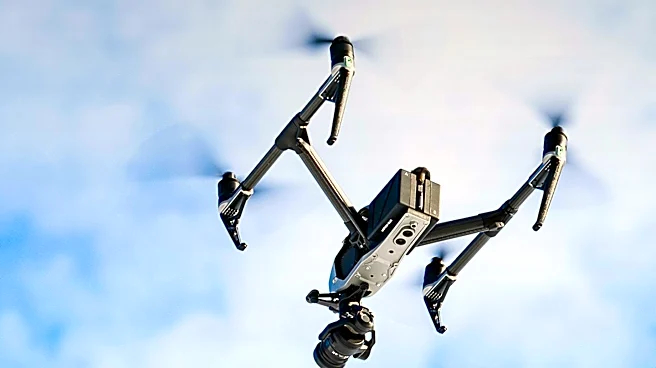
aircraft in Myanmar. The NIA informed a Delhi court that it possesses 'credible information' regarding the involvement of these foreign nationals in the incident. The alleged attack involved a first-person-view (FPV) drone striking a Myanmar National Airlines ATR-72-600 at Myitkyina Airport as it prepared for departure, causing damage to its nose, mid-fuselage, and tail. The investigation began after seven foreign nationals were arrested in March while attempting to leave India. The NIA claims that 14 Ukrainian nationals entered India on tourist visas, traveled to Guwahati, and then allegedly entered Mizoram without required permits before crossing illegally into Myanmar for pre-scheduled training in drone warfare, operations, assembly, and jamming technology. This training was reportedly intended for Myanmar-based Ethnic Armed Groups (EAGs) targeting the country's military junta. The agency has obtained judicial permission to interrogate Ukrainian national Viktor Kaminskyi and American national Matthew VanDyke, focusing on their network and the broader conspiracy.
Why It's Important?
This investigation is significant as it could reveal a transnational security infrastructure involving foreign operatives, advanced battlefield drone technology, and clandestine cross-border networks. If substantiated, the allegations would transform the case from an isolated criminal incident into a major counterintelligence and regional security concern for India and potentially the U.S. The alleged involvement of a U.S. national, Matthew VanDyke, founder of Sons of Liberty International, adds a layer of complexity, as his background in providing military training in conflict zones will be closely scrutinized. The case highlights the emerging model of distributed warfare, where personnel, technology, and expertise can move across multiple countries, creating fragmented responsibility and new security challenges. The NIA's focus on uncovering the 'larger conspiracy' suggests a concern about the potential for such networks to pose significant threats to national security, particularly given the alleged connections between Myanmar's ethnic armed groups and banned Indian insurgent organizations.
What's Next?
The NIA will proceed with interrogating Viktor Kaminskyi and Matthew VanDyke in Tihar Jail, confronting them with witness statements and other evidence to uncover the 'larger conspiracy.' Investigators will focus on identifying who acquired the technology, trained the operators, financed the operation, facilitated cross-border movement, and provided access to armed groups. The agency will also seek to corroborate data extracted from seized electronic devices, including images, videos, and voice recordings. Ukraine has rejected insinuations of state involvement in supporting terrorism and has demanded the release of its nationals, indicating potential diplomatic tensions. The investigation's findings will determine whether the Myanmar aircraft incident was an isolated act or part of a more extensive clandestine operation, potentially leading to further arrests, international cooperation, or policy changes regarding border security and the monitoring of foreign nationals involved in military training.
Beyond the Headlines
The case delves into the ethical and legal complexities of individuals providing military training in conflict zones, particularly when such activities are alleged to be linked to attacks on civilian infrastructure. The rapid dissemination of drone warfare expertise, a defining feature of modern conflicts like that in Ukraine, presents a new global security problem where battlefield knowledge can move across borders faster than conventional military hardware. This incident underscores the challenge for nations like India in detecting and disrupting emerging transnational security networks before they become entrenched. The alleged movement of European-sourced drone consignments into India and potentially onward to Myanmar raises questions about international arms trafficking and the oversight of dual-use technologies. The investigation's outcome could set precedents for how countries address the involvement of foreign nationals in regional conflicts and the implications for international law and counter-terrorism efforts.