



What's Happening?
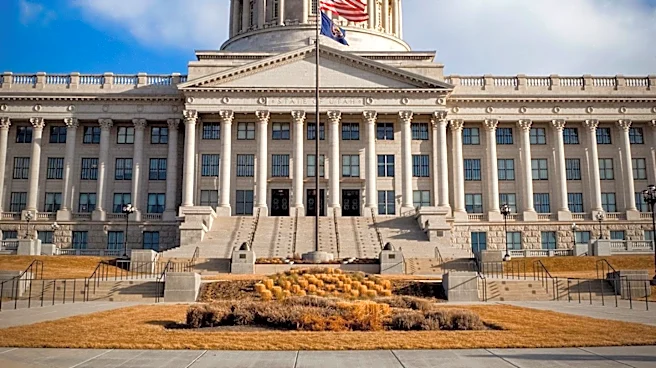
Three Utah-based organizations—Downwinders, Inc., Healthy Environment Alliance of Utah, and Utah Physicians for a Healthy Environment—have filed a formal complaint with the Federal Trade Commission (FTC). The complaint alleges that the Utah Office of Energy
Development's nuclear energy advertising campaign is misleading and downplays concerns related to radiation and nuclear waste. The campaign, which included billboards stating claims like 'Nuclear plants emit less radiation than bananas' and 'Nuclear waste storage is safer than your leftovers,' is part of Governor Spencer Cox's 'Operation Gigawatt' initiative to double reliable energy production by 2034. Critics argue that these advertisements are an 'insult to science' and do not accurately represent the risks associated with nuclear energy, particularly regarding long-term waste disposal and potential health impacts from radiation exposure.
Why It's Important?
This FTC complaint is significant because it challenges the transparency and accuracy of state-sponsored energy promotion, particularly in a sector with historical public concern like nuclear power. The outcome could influence how government entities are allowed to advertise energy initiatives and the standards for factual representation in public campaigns. For Utah, which aims to significantly increase its nuclear energy capacity, a ruling against the state's advertising could undermine public trust and complicate future energy projects. It also highlights the ongoing debate between energy development and environmental protection, with implications for public health and safety. The case could set a precedent for how environmental and health advocacy groups can hold government agencies accountable for their public messaging, potentially affecting energy policies and public perception of nuclear power nationwide.
What's Next?
The FTC will now review the complaint filed by the Utah organizations. This review will likely involve an investigation into the claims made in the nuclear energy advertisements and an assessment of whether they constitute misleading or unsubstantiated information. Depending on the FTC's findings, the agency could issue a warning, require the state to modify or cease its advertising campaign, or impose other corrective actions. The Utah Office of Energy Development has stated its commitment to sharing 'fact-based, science-based information,' suggesting they may defend their campaign's accuracy. This situation could also lead to increased public debate and scrutiny over Utah's nuclear energy plans, potentially influencing legislative decisions and public support for 'Operation Gigawatt.' Environmental and health advocacy groups will likely continue to monitor and challenge similar campaigns in other states.
Beyond the Headlines
Beyond the immediate dispute, this complaint touches on broader issues of scientific literacy and public communication in an era of complex technological advancements. The 'bananas' comparison, while scientifically accurate in a narrow context of natural radiation, is criticized for potentially oversimplifying the risks of nuclear power and misinforming the public. This raises questions about the ethics of using selective scientific facts in public campaigns and the responsibility of government agencies to provide comprehensive and balanced information. The case also reflects the persistent challenge of managing nuclear waste, a problem that remains largely unresolved in the U.S. The public's perception of nuclear energy, often shaped by historical events and media portrayals, continues to be a critical factor in its adoption, making transparent and accurate communication paramount.